 - Copy.png)
Welcome — personalize your path
Enter your name to let the parietal cell narrators speak to you directly.
Safety first (hover tip also on tab)
- 1) Perfusion before pain meds — check MAP/skin/mentation first.
- 2) Two large-bore IVs for UGIB — secure access for bolus, blood, meds.
- 3) Stop NSAIDs, verify allergies — protect Goblet Mucus factories.
Perfusion Pipeline: fuel before repair
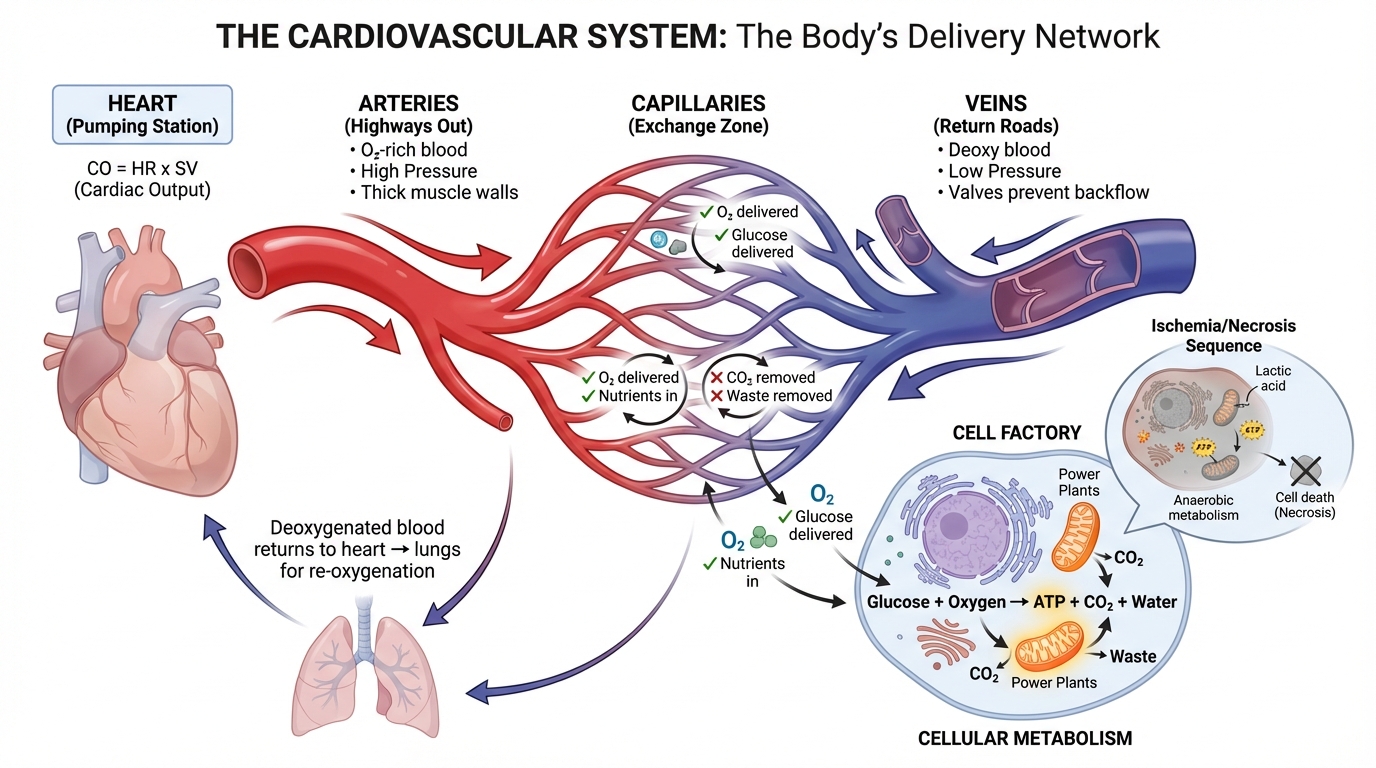
"MK, I am Agent Perfusion First, an endothelial cell factory. I link to fellow endothelial factories with tight junctions to build the epithelial lining of every blood vessel. My mandate: deliver oxygen, glucose, electrolytes, and amino acids so downstream factories can make ATP and proteins. If I slow, every mandate stalls and organs suffer."
"I am Agent Pneumocyte Oxygen, one Type I pneumocyte cell factory. I link tightly with fellow pneumocyte factories to form the alveolar epithelial tissue. We pull oxygen from air into blood, handing it to Perfusion First so it reaches Parietal Acid and Goblet Mucus in the stomach organ. Slow flow means less ATP for them and weaker protection."
Simple chain for ${namePlaceholder()}: When blood flow is strong, ATP is plenty, the acid pump and mucus shield both work, and the lining stays safe. When flow slows, ATP falls, the pump weakens, the mucus thins, acid touches the lining, a sore forms, and it can bleed.
See it: Red cells carry O₂/glucose; mitochondria glow making ATP; H⁺ streams out cleanly. If flow drops, glow fades, pump sputters, acid splashes, vessels in connective tissue get exposed.
Nursing tip: first bedside cue of mucus thinning is burning pain that eases briefly with food/antacid—teach patients to report that early.
| # | Perfusion input | Cell factory part | Tissue state OK | Tissue state LOW | Observable cue (LOW) | Nursing action + why |
|---|---|---|---|---|---|---|
| 1 | Oxygen + glucose delivered | Parietal/Goblet mitochondria make ATP for pumps & mucus | Lining coated, pump steady | ATP drops, pump sputters, mucus thin | Burning eased by food/antacid | Check perfusion to restore ATP; PPI calms pump; hold NSAIDs so mucus rebuilds. |
| 2 | Water + electrolytes | Mucus + bicarbonate gel production | Thick gel blankets epithelial tiles | Gel thins and cracks | Dry mouth, irritation | Hydrate (PO/IV) to rebuild gel; reassess perfusion. |
| 3 | Perfusion pressure | Capillary flow keeps cells fueled | Warm, pink mucosa | Ischemic, cool tissue | Cool clammy skin; orthostatic drop | Raise HOB, give O₂, start/prepare bolus to lift MAP so ATP returns. |
| 4 | Barrier integrity | Mucus + tight junctions intact | Tiles sealed | Erosion exposes submucosa vessels | Coffee-ground emesis, melena | Alert provider, large-bore IVs, type & cross — restore perfusion and prepare to stop source. |
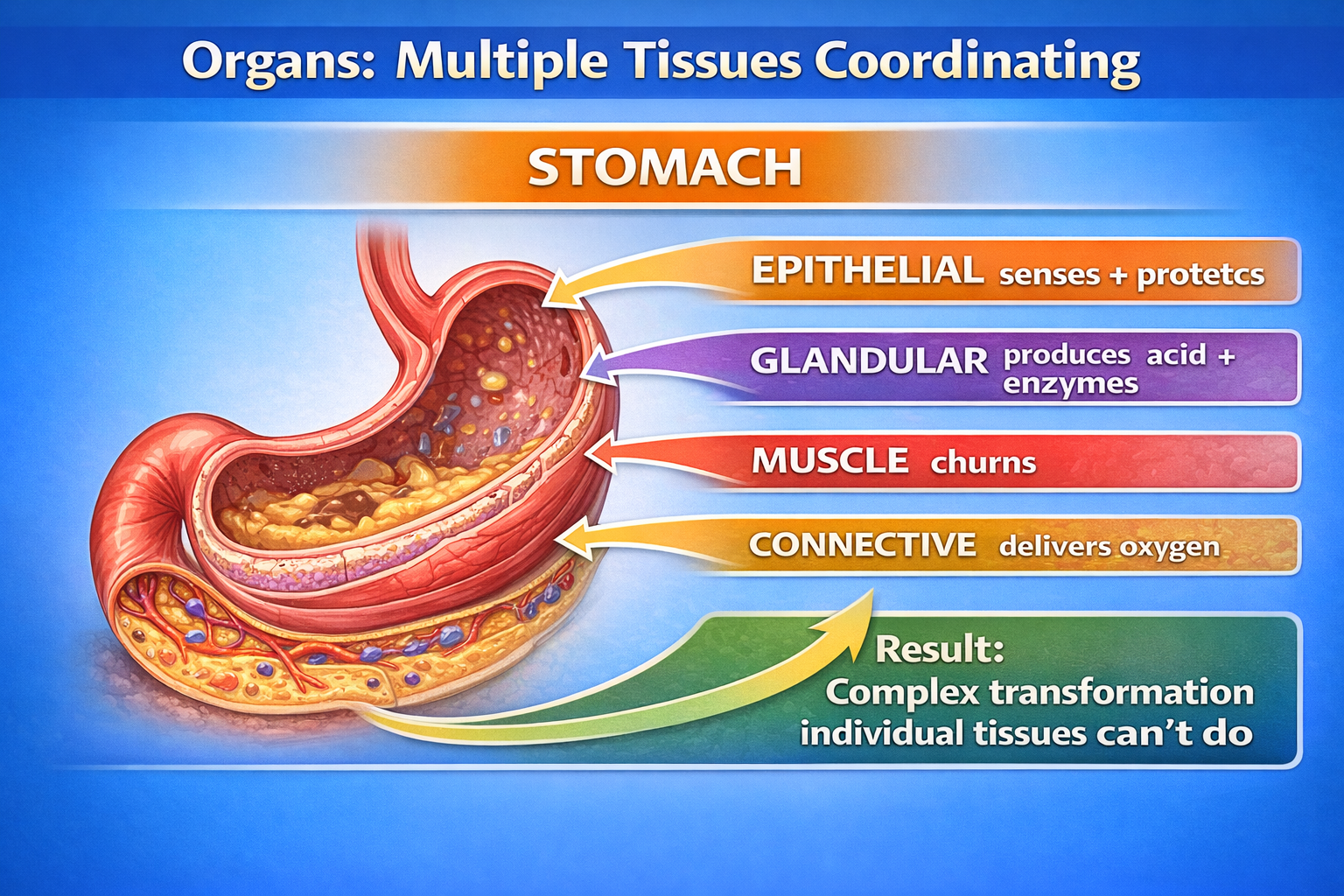
Stomach factory at a glance
Zoom out: perfusion feeds ATP; ATP powers pumps; pumps protect tissue. Keep that loop intact.
Quick Cue Radar
Fast map: cue → meaning → nursing move.
Burning pain eased by food
Meaning: acid touching epithelium because mucus shield thinned.
Actions:
1) Give PPI/antacid per order
2) Stop NSAIDs
3) Check perfusion (HR/BP/skin)
Why:
1) Calms Parietal Acid pump
2) Protects Goblet Mucus factories
3) Restores ATP delivery so pump + mucus rebuild
Coffee-ground emesis
Meaning: bleed has sat in stomach long enough to digest.
Actions:
1) Alert provider
2) Large-bore IV access
3) Fluids; type & cross
Why:
1) Early escalation controls source
2) IVs let Perfusion First deliver volume/O₂
3) Resuscitation buys time for hemostasis
Cool clammy skin + MAP <65
Meaning: perfusion failing, sympathetic overdrive.
Actions:
1) Rapid bolus
2) Hold sedatives
3) Prepare vasopressors if ordered
Why:
1) Bolus restores Perfusion First → ATP for factories
2) Sedatives drop pressure more
3) Pressors squeeze Smooth Muscle to raise MAP briefly
Read-aloud
Use neural TTS where available; falls back to the browser SpeechSynthesis API. Highlighting tracks spoken words when supported.