
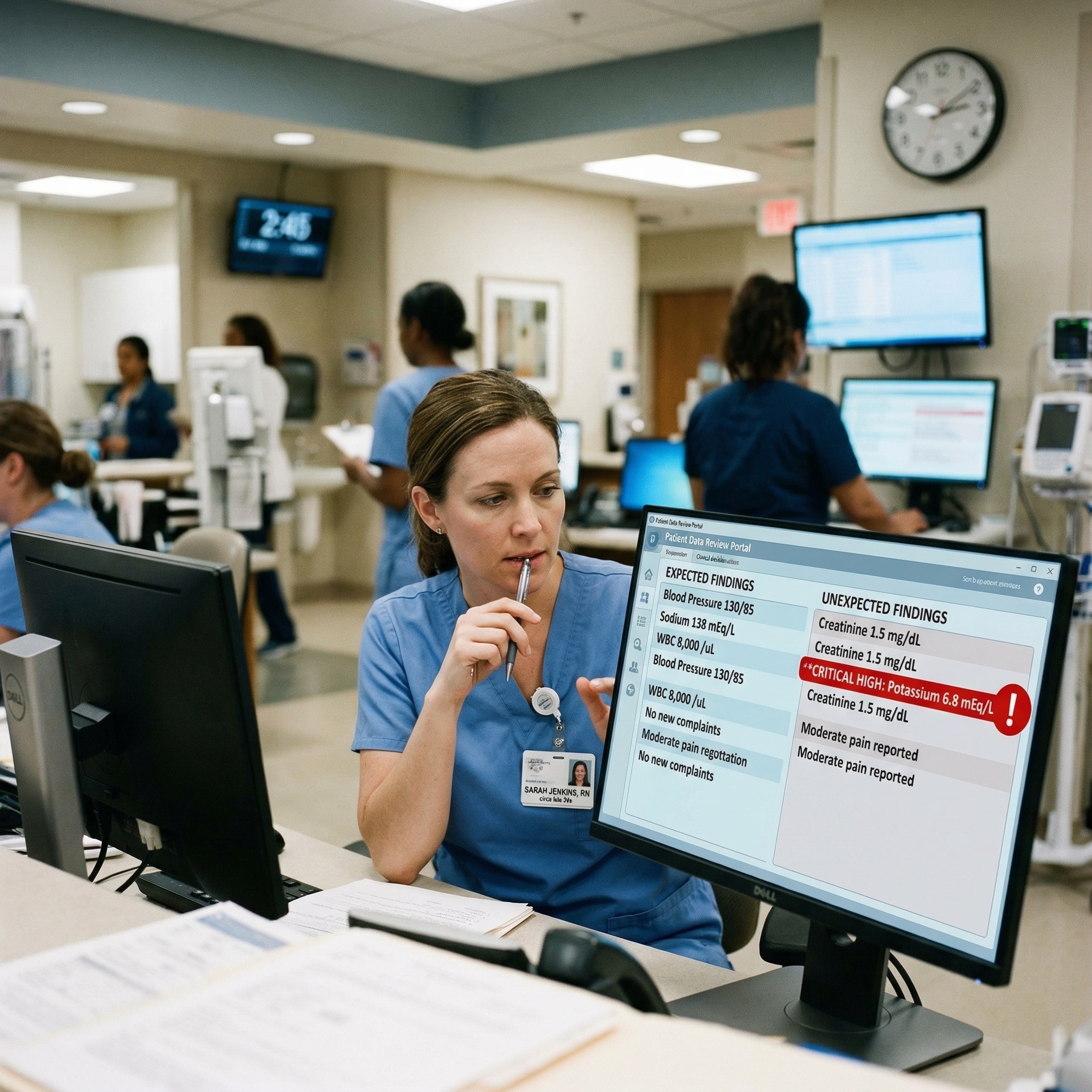
Expected vs Unexpected Cues: The Fastest Way to Stop Guessing
Students guess when every cue feels equally loud. They see vital signs, history, symptoms, medications, and labs all at once, and they do not know which detail deserves the most attention. That is why expected-versus-unexpected cue sorting is so powerful. It creates order fast.
Expected cues are findings that fit the diagnosis, baseline, stage of illness, or treatment situation. Unexpected cues are the ones that do not fit, suggest deterioration, or raise concern for a new complication. That does not mean every expected cue is harmless or every unexpected cue is equally urgent. It means the learner now has a way to sort the field.
Why this skill changes how questions feel
Without a sorting method, a student often stares at four answer choices and thinks all of them sound possible. With cue sorting, some options begin to weaken quickly. If an answer ignores the unexpected cue that threatens perfusion or safety, it is probably not the best response. If an option overreacts to a stable expected cue while missing a new dangerous change, that answer becomes less convincing.
This is why cue sorting reduces guessing. It gives the learner a hierarchy.
How to apply the method
Start by building the baseline. Then ask what should reasonably be present in this patient. A chronic respiratory patient may have findings that would be alarming in someone else. A postop patient may have expected discomfort and mild changes that are not the main danger. But a new mental-status change, worsening oxygenation, falling urine output, or sudden instability often deserves immediate attention.
The skill is not only about spotting the wrong cue. It is about recognizing the cue that changes the whole meaning of the case.
Why students miss the unexpected cue
Students often get distracted by the familiar. If a question includes a diagnosis they recognize, they may anchor too early and stop asking what is new. That is why some questions feel unfair. The learner is trapped in the disease label rather than reading the actual patient in front of them.
Expected-versus-unexpected thinking protects against that trap. It forces the student to compare current data to what should be happening now.
Why this matters beyond the exam
Safe nursing requires noticing change. Expected findings help orient the nurse. Unexpected findings help the nurse recognize when a patient is becoming unsafe. That is why this is not just a test trick. It is a bedside skill.
Students who practice it repeatedly begin to feel calmer during questions because they are no longer trying to carry every data point at the same weight. They are learning to sort.
What the program does with this
NursingAcademics builds expected-versus-unexpected cue work directly into the immersion sequence, baseline drills, and adaptive remediation. The goal is not just to explain the idea once. The goal is to make the skill usable.
Practice expected vs unexpected cues