Fundamentals Reset
Final-pass fundamentals: safety, infection control, delegation, scope, and bedside basics that keep showing up inside mixed NCLEX questions.
- Choose the safest LPN action when infection or safety risk is present.
- Separate RN, LPN, UAP, and provider responsibilities under pressure.
- Use fundamentals as the first filter before chasing details.
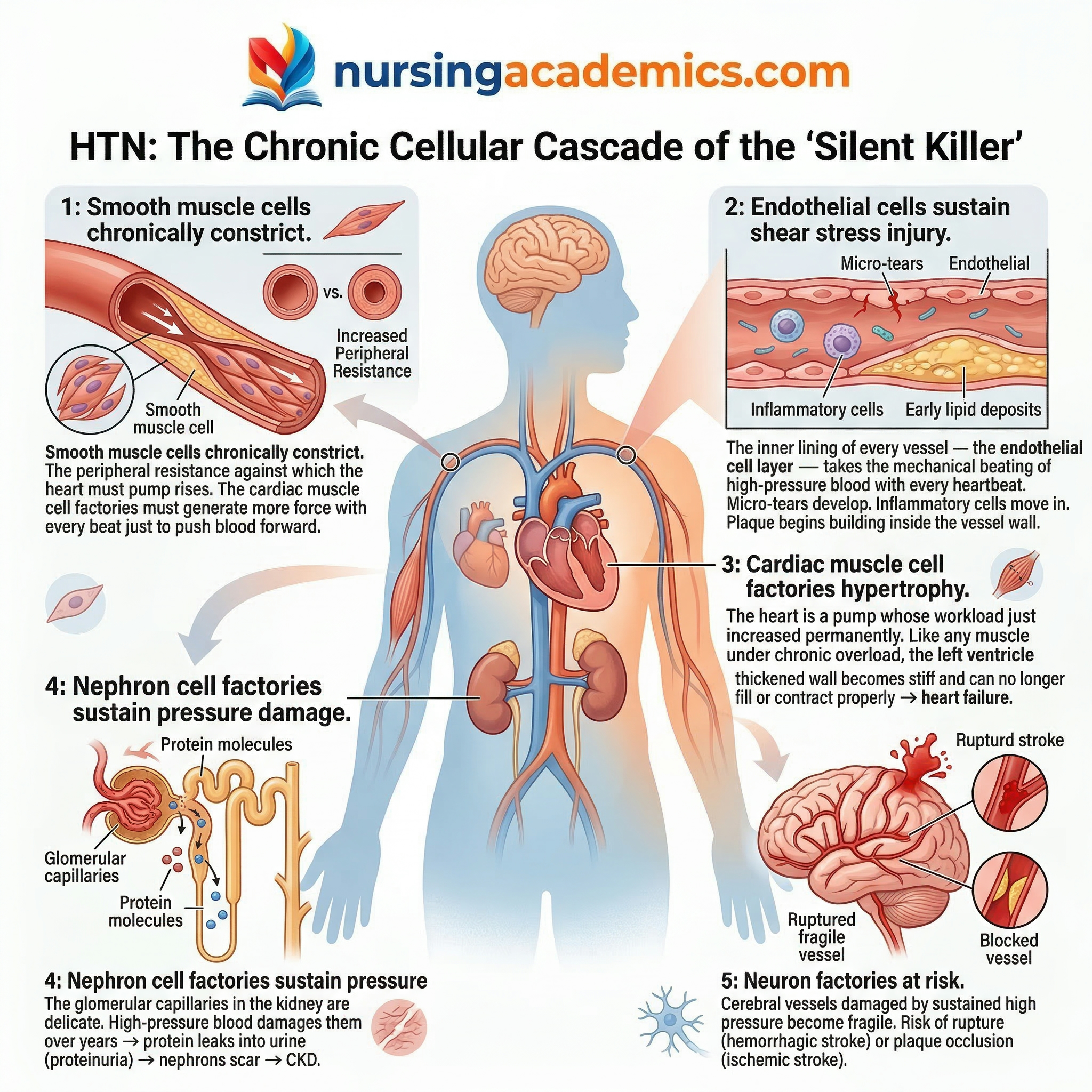
Endothelial Cell Factory
The endothelium is the vessel lining that controls traffic, tone, clotting balance, inflammation, and delivery to tissues.
- Explain how vessel lining injury threatens perfusion and clotting balance.
- Connect endothelial dysfunction to cardiac, renal, stroke, and medication cues.
- Recognize vascular warning signs that should be reported quickly.
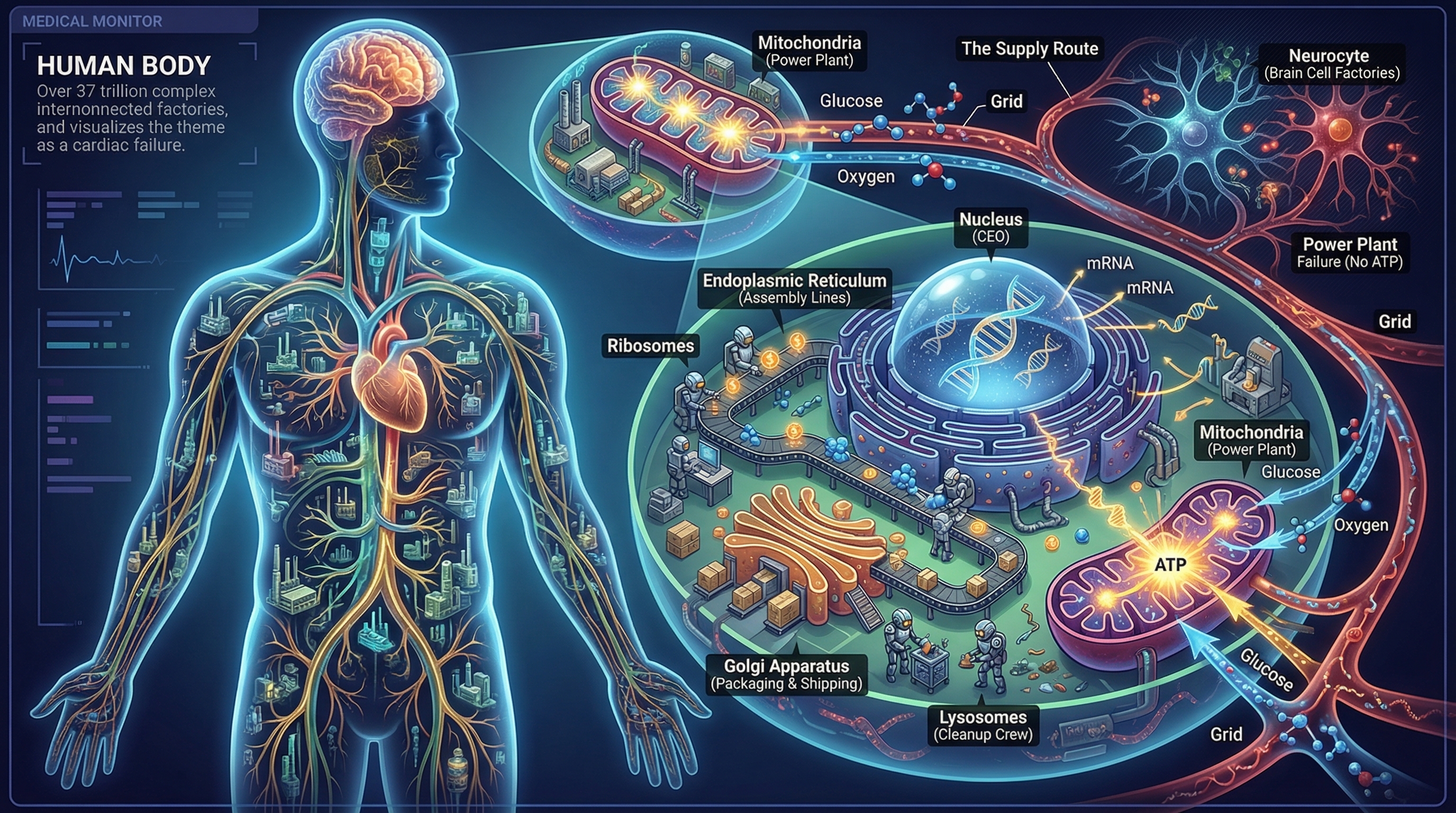
Cell Factory Mandate
This is the Phase 3 anchor: every patient cue is traced back to cells losing supplies, energy, output, or regulation.
- Use the cell factory model before memorizing isolated symptoms.
- Explain why perfusion loss is always a high-priority threat.
- Turn oxygen, water, glucose, electrolytes, and nutrients into a safety scan.
Cell Biology Body Factory
This section reconnects cell biology to whole-body function so organ symptoms feel like coordinated factory failures, not random facts.
- Explain how cell-level failure becomes organ-level dysfunction.
- Connect body-system symptoms back to the cell type or delivery problem.
- Use the whole-body factory map to organize complex questions.
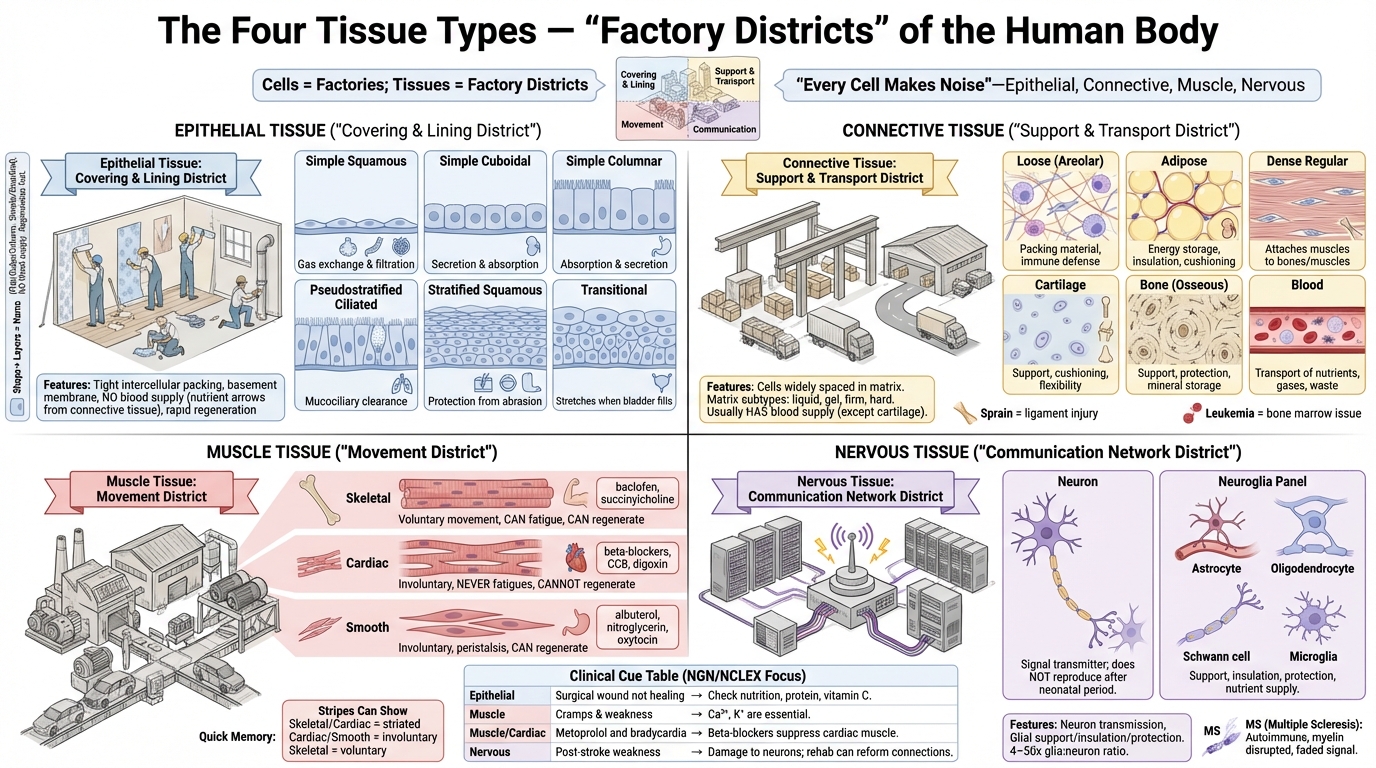
Tissue Bridge
The four tissue types are the bridge from cells to bedside cues: barriers, support, movement, and electrical control.
- Match epithelial, connective, muscle, and nerve tissue to their core jobs.
- Predict what cue appears when a tissue type fails.
- Use tissue type to narrow the meaning of swelling, pain, weakness, or confusion.
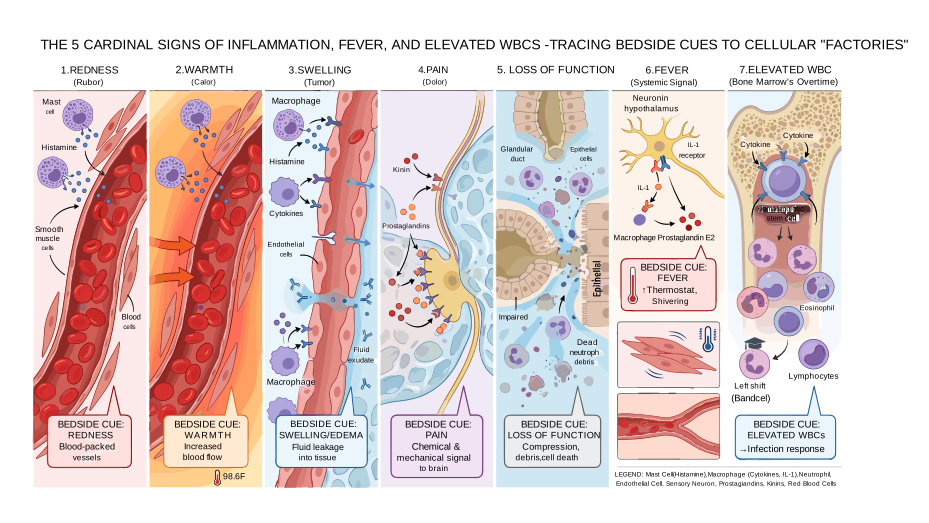
Cell Factory Inflammation
Inflammation is a predictable defense pattern: helpful when controlled, dangerous when it blocks perfusion, oxygenation, or tissue repair.
- Explain redness, heat, swelling, pain, and loss of function as cellular events.
- Separate expected inflammation from infection or worsening injury.
- Identify when inflammatory swelling threatens perfusion or breathing.
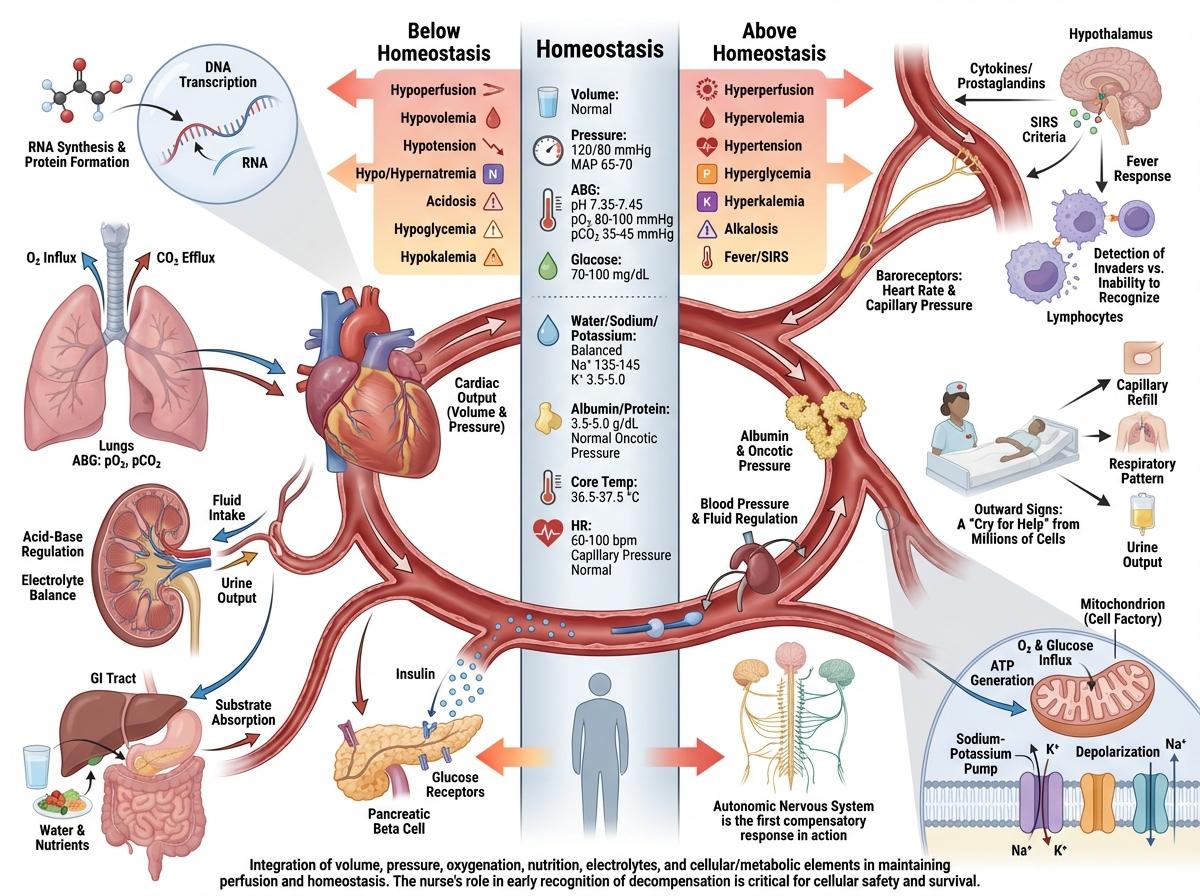
Grand Unified Perfusion + Homeostasis
This section ties perfusion, homeostasis, compensation, and return-to-baseline therapy into one final mental model.
- Explain how the body tries to compensate before it decompensates.
- Connect abnormal cues to homeostasis moving too far left or right.
- Predict how therapies and medications try to return the patient to baseline.
Cell Factory Disease Navigator
Disease becomes easier when the learner asks which factory is failing, what output is missing, and which downstream cells are affected.
- Trace a disease pattern back to the failing cell or tissue process.
- Connect labs, symptoms, and medications to one failure pathway.
- Use disease navigation to avoid answer-choice distraction.
Expected Cues Dashboard
Expected cues help you compare what should be present against what is new, missing, worsening, or dangerous.
- Predict expected cues before reading answer choices.
- Find the mismatch that makes a patient unstable or higher priority.
- Use missing or worsening cues to decide what to report.
Clinical Judgment Reference
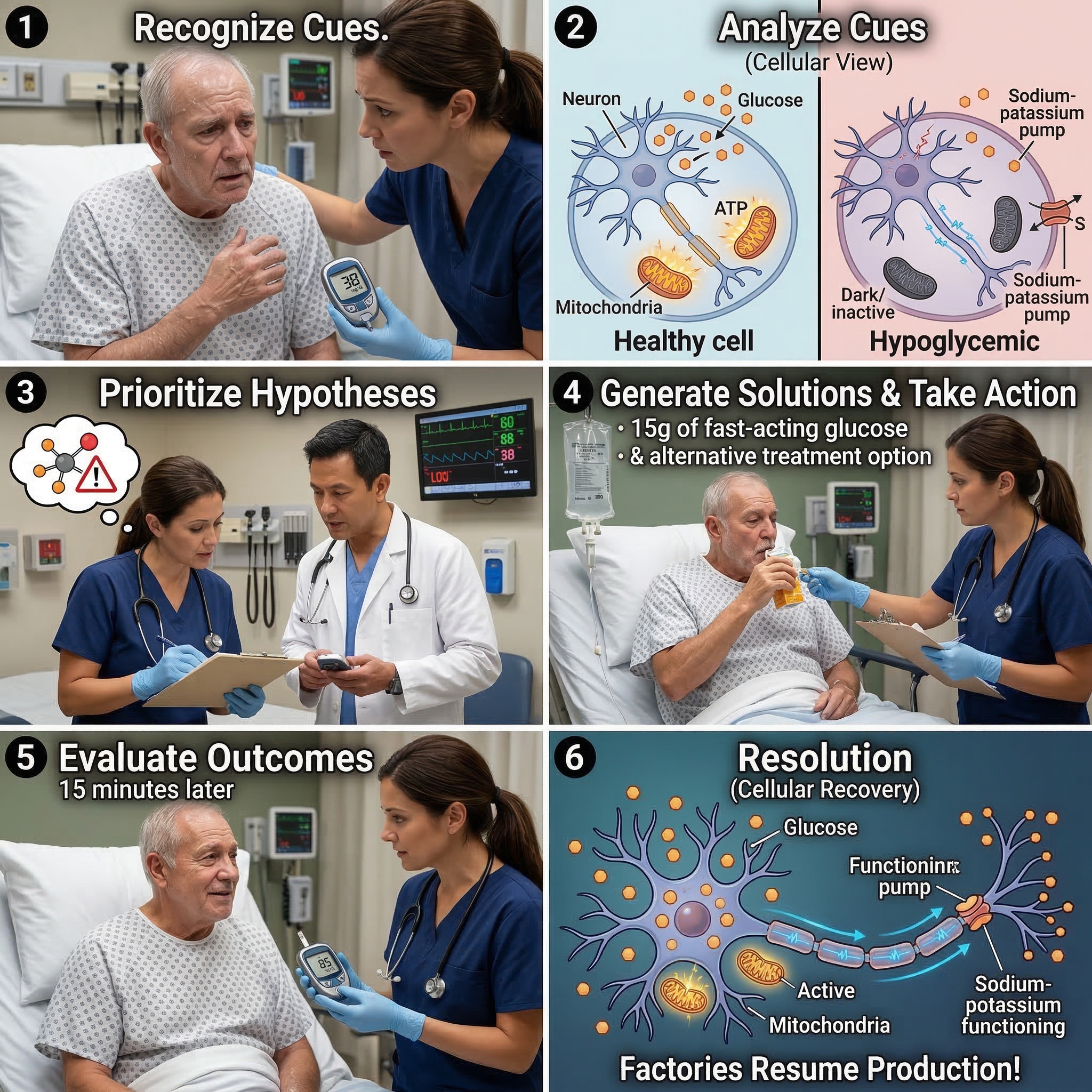
This section converts content knowledge into the NCLEX judgment sequence: recognize cues, analyze, prioritize, act, and evaluate.
- Move from facts to a safe clinical decision pathway.
- Identify the cue the question is really testing.
- Choose LPN-safe actions and escalation points.
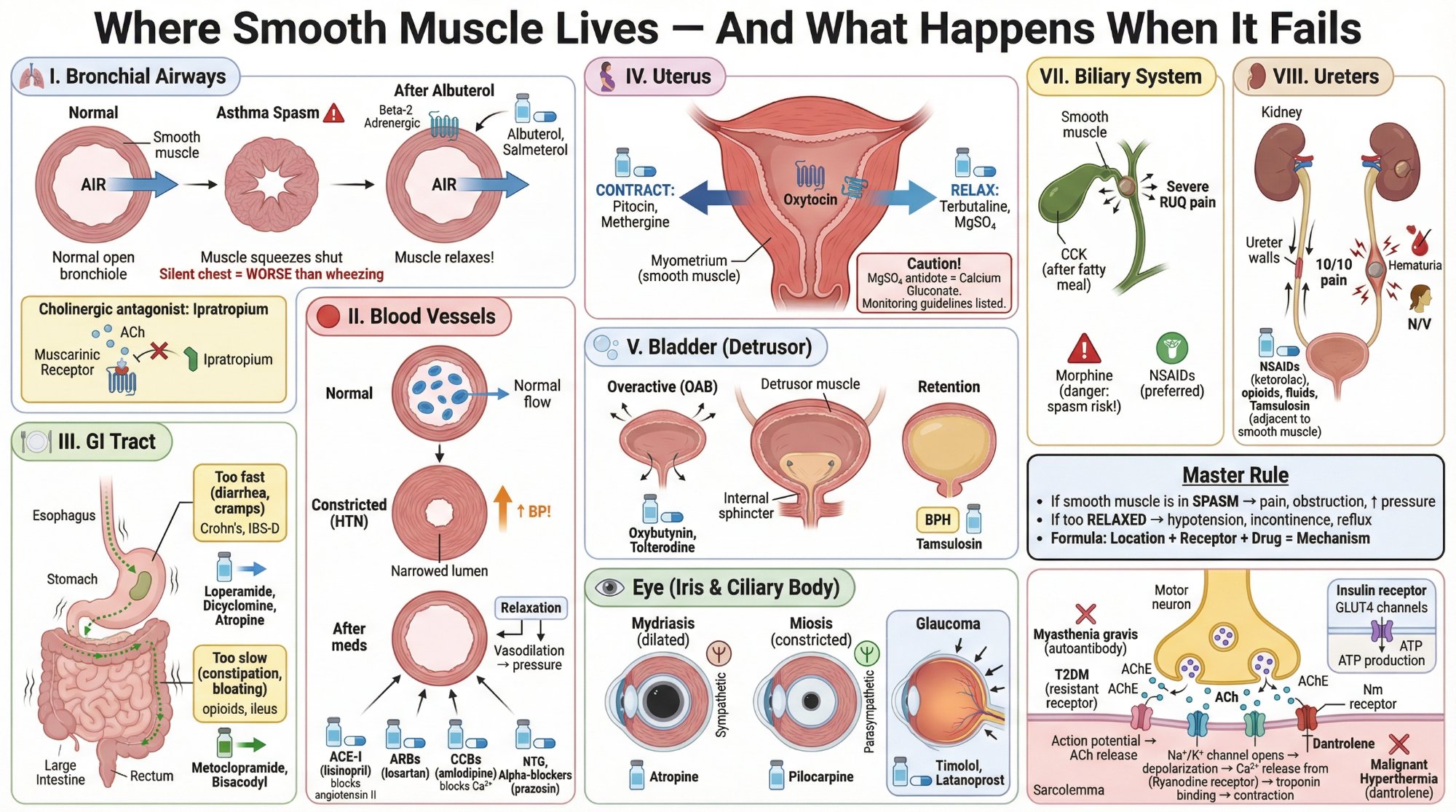
Smooth Muscle Clinical Judgment GI
Smooth muscle logic explains GI movement, spasms, obstruction cues, and medication effects through contraction and relaxation.
- Connect receptor signals to smooth muscle contraction or relaxation.
- Explain GI cues using motility, perfusion, and obstruction logic.
- Apply smooth muscle reasoning to priority and medication questions.
Smooth Muscle Grand Final
The smooth muscle series comes together across vessels, bronchioles, GI tract, uterus, bladder, and other exam-tested systems.
- Recognize smooth muscle patterns across multiple body systems.
- Predict whether a drug or disease increases or decreases tone.
- Use receptor-to-cue logic when answer choices sound similar.
Baseline Tutorial
A cue is only meaningful when compared with the patient baseline: history, age, chronic disease, medications, and normal-for-them patterns.
- Build a patient baseline from history and current data.
- Separate chronic expected findings from new danger cues.
- Use baseline thinking before deciding who is most unstable.
Build the Baseline
This drill turns baseline reading into a repeatable skill so the learner can do it quickly inside timed questions.
- Pull the baseline from a patient story without over-reading.
- Compare new data against expected chronic findings.
- Practice the baseline scan until it becomes automatic.
Patient History Context Lens
Patient context changes the meaning of the same cue. Age, diagnosis, meds, and baseline decide whether a finding is expected or urgent.
- Use history to interpret vital signs, labs, and symptoms.
- Identify when a normal-looking number is unsafe for that patient.
- Avoid treating every patient cue as if it has the same meaning.
Context Predict Compare
This section trains the exam habit: predict expected cues first, then compare the actual data and find the mismatch.
- Predict what should happen before looking at answer choices.
- Spot unexpected cues that change priority.
- Use comparison to choose the safest next action.
Mastery Drill
A mixed rapid-review section that exposes weak spots and strengthens recall under exam-style pressure.
- Answer mixed topics without losing the perfusion-first scan.
- Identify weak areas that need targeted review.
- Practice moving quickly without abandoning safety logic.
Question Attack Strategy
This is the question-reading method: find the patient, find the cue, identify the task, eliminate traps, and choose the safest LPN action.
- Break down NCLEX wording before reacting to answer choices.
- Eliminate distractors using scope, safety, ABCs, and expected cues.
- Choose the best answer when more than one option sounds possible.
Diagnoses Baseline Reference
High-yield diagnosis baselines help the learner recognize what is expected, what is worsening, and what medication risks matter.
- Describe baseline patterns for common chronic diagnoses.
- Connect diagnosis, medication, and danger cue in one frame.
- Use the diagnosis baseline to answer mixed-case questions faster.
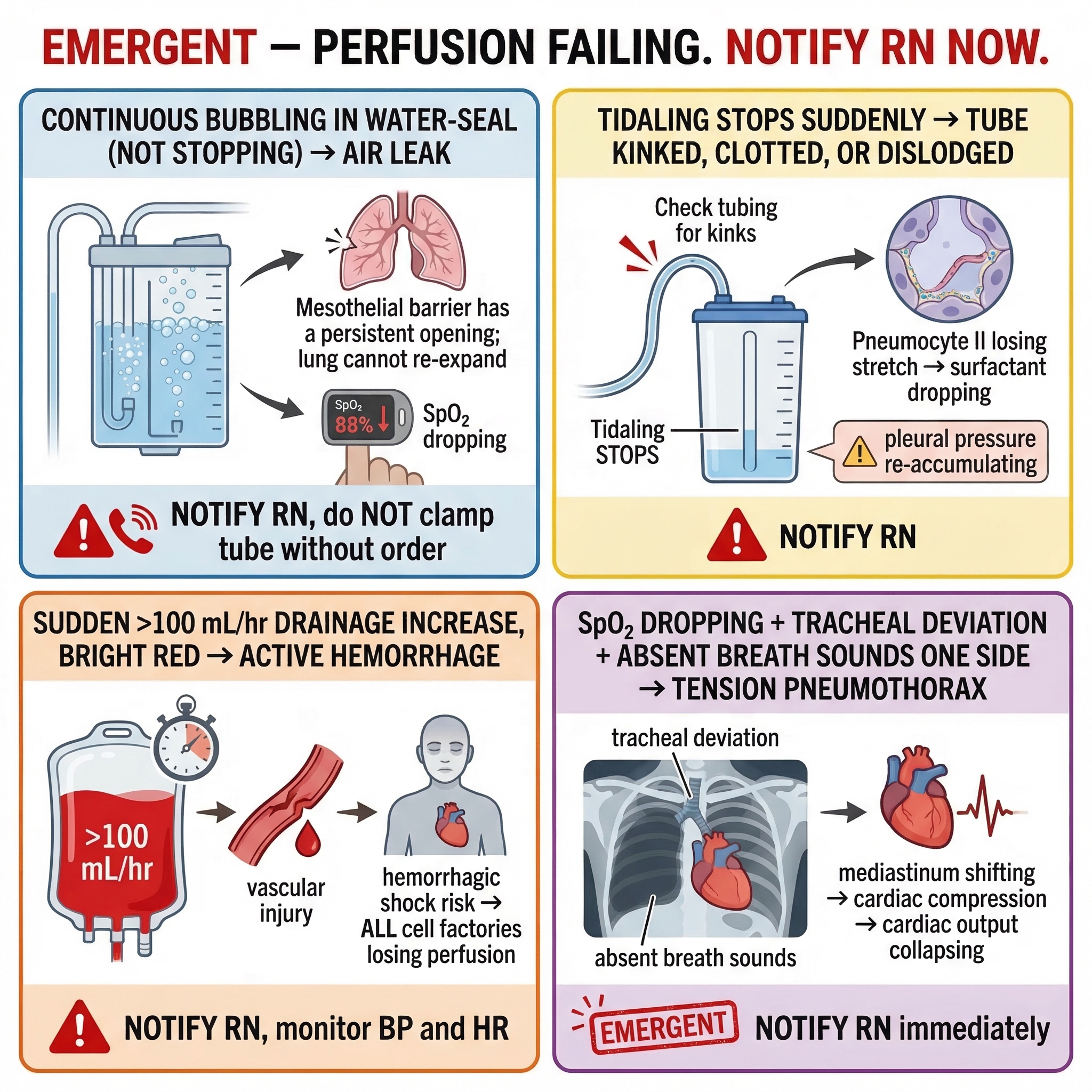
Bedside Tubes Cell Factory
Tubes and lines are direct pathways into the body. This section focuses on placement, drainage, obstruction, infection, and what must be reported.
- Name the safety checks for common tubes and lines.
- Recognize output, placement, or drainage changes that need escalation.
- Connect tube problems to perfusion, oxygenation, infection, or fluid balance.
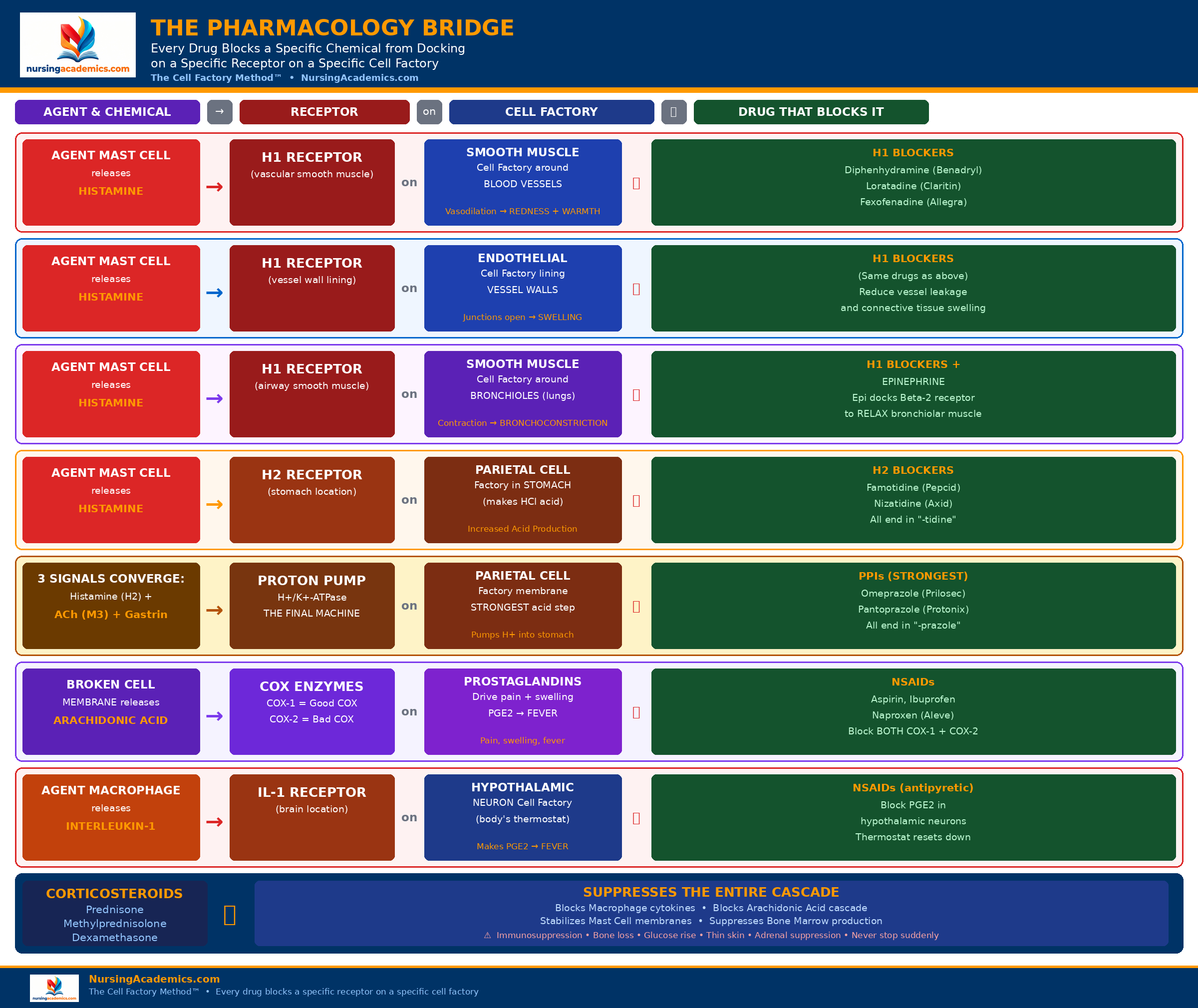
Pre-Exam Pharmacology
Final medication review focuses on hold parameters, receptor effects, side effects, interactions, and LPN-safe actions.
- Use drug effect and vital signs to decide give, hold, or report.
- Recognize high-risk medication adverse effects and interactions.
- Tie medication action back to return-to-baseline thinking.
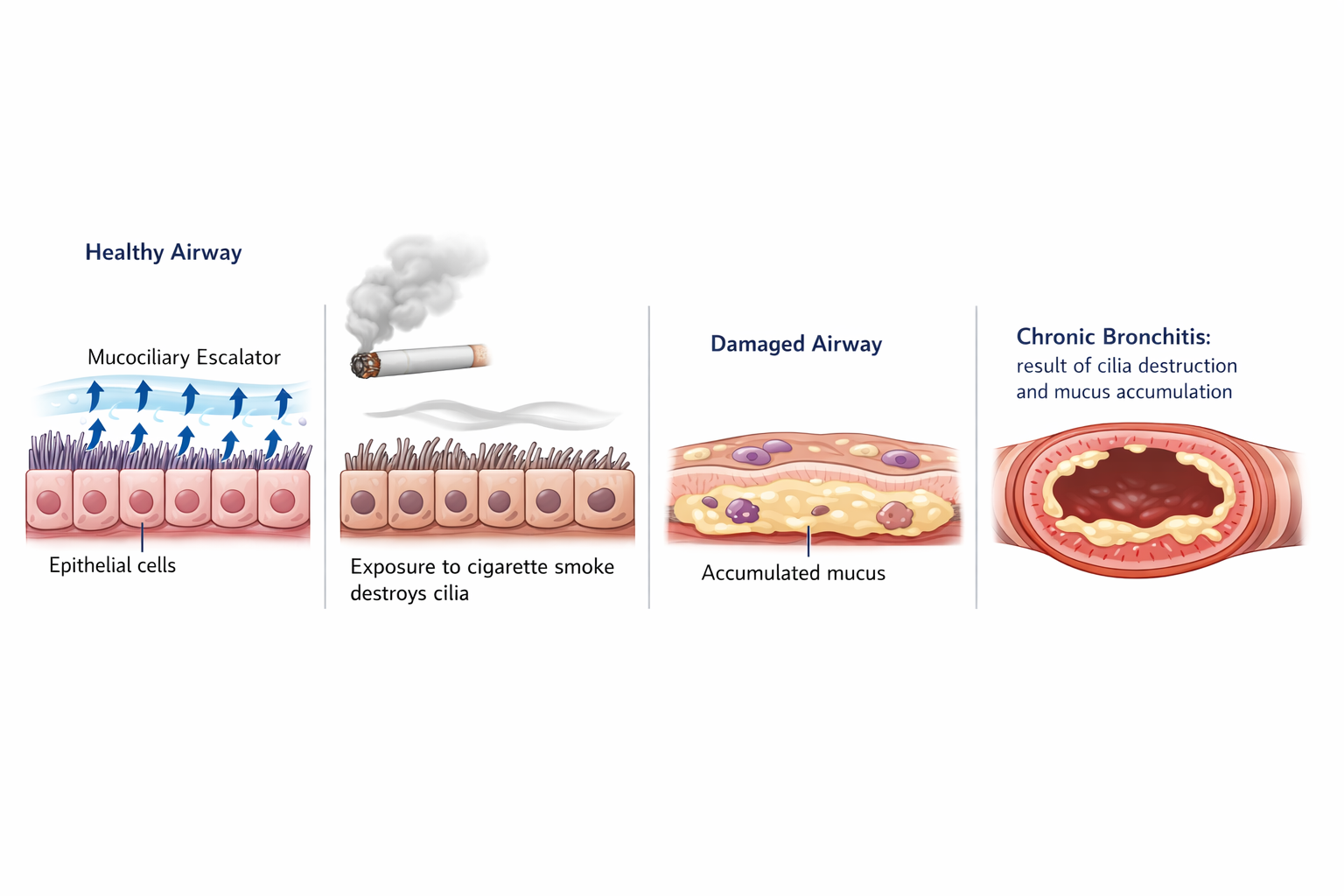
Pulmonary Review
The final rescue-system review: airway, breathing, oxygenation, ventilation, and when respiratory cues become the first priority.
- Prioritize airway and breathing cues correctly.
- Connect oxygenation problems to cell energy failure.
- Choose the safest immediate action for respiratory distress.
Additional Phase 3 Videos
Extra video reinforcement for Phase 3 concepts that benefit from another pass before exam day.
- Use extra videos to reinforce weak or high-risk concepts.
- Connect video examples back to the matching clinical reasoning pattern.
- Review without changing the core Phase 3 sequence.
Final Send-Off
A closing confidence check that reviews how to enter exam day with the same method used across the course.
- Use the same scan on every question: patient, cue, priority, scope, safety.
- Avoid last-minute topic chasing that breaks the reasoning pattern.
- Finish with a clear plan for pacing, confidence, and review.
Escape the Unit: 10-Room LPN Clinical Boot Camp
Race the clock through ten locked hospital rooms, each one testing a different piece of your LPN scope before you can escape to the next. Rooms cover delegation to the RN, UAP, and provider; isolation precautions and PPE selection; medication give-or-hold decisions; priority ranking in an emergency bay; a legal and ethics quiz; Maslow's hierarchy matching; developmental theory matching; labor and delivery vitals; tube and line identification; and a final SBAR report at the nurses' station. A timed HUD and mentor guide track your score and room progress as you drag, drop, and choose your way through each scenario. The format reinforces core LPN-PN foundations under exam-like time pressure.
Topics: Review Game, Escape Room, Delegation, Infection Control, Medication Safety, Prioritization, SBAR, NCLEX-PN
Cardiovascular & Renal Pharmacology Quiz: Mechanism-Based Review
Can you predict a drug's side effects just by knowing which receptor or transporter it targets? This customizable quiz bank lets learners pick categories (diuretics, cardiac glycosides, beta-blockers, calcium channel blockers, ACE inhibitors and ARBs, nitrates, anticoagulants, and respiratory agents) and set a question count from 10 to all available. Each item pairs a cell-location rationale with a clinical pearl, nursing alert, drug connection, and memory aid so LPN students connect mechanism to bedside safety actions.
Topics: Pharmacology, Quiz, Diuretics, Cardiac Glycosides, Beta-Blockers, ACE Inhibitors, Anticoagulants, NCLEX-PN
Integrated Medication Safety Quiz: Autonomic & Renal Pharmacology
How well can you connect a drug's receptor target to the exact lab value or vital sign you must check first? This selectable-category question bank covers diuretics, cardiac and adrenergic agents (beta-blockers, calcium channel blockers, alpha blockers, clonidine), ACE inhibitors and ARBs, nitrates, anticholinergics, and insulin therapy. Each explanation adds a textbook page reference, a cell-location rationale, clinical pearls, nursing alerts, and memory aids built around receptor mechanism.
Topics: Pharmacology, Quiz, Adrenergic Agents, Anticholinergics, Diuretics, ACE Inhibitors, Insulin, NCLEX-PN
Coordinated Care and Delegation Mini-Exam
Can you tell which tasks are safe to delegate to a UAP and which ones only a licensed nurse can perform? This five-question mini-exam in the Safe and Effective Care Environment category drills LPN scope on delegation, informed consent, telephone orders, and prioritization. Questions include a select-all-that-apply item on appropriate UAP tasks and single-response items on withdrawing consent, hypoglycemia prioritization, and read-back verification for telephone orders. Rationales tie each answer back to LPN scope-of-practice boundaries and the five rights of delegation.
Topics: Delegation, LPN Scope, Informed Consent, Prioritization, Coordinated Care, NCLEX-PN, Mini-Exam
Medication Administration Pharmacology Mini-Exam
Do you know when to hold digoxin, worry about an INR, or treat an opioid finding as an emergency? This five-question mini-exam in the Pharmacological Therapies category drills high-alert medication safety: digoxin apical pulse thresholds, warfarin INR interpretation, insulin onset and mixing rules, opioid-induced respiratory depression, and ACE inhibitor side effects. One item is a select-all-that-apply question on insulin glargine versus lispro. Rationales include quick-reference drug boxes and NCLEX test-taking tips for each medication class.
Topics: Pharmacology, Medication Safety, Insulin, Anticoagulants, Opioids, High-Alert Drugs, NCLEX-PN, Mini-Exam
Emergency Recognition and Response Mini-Exam
Can you spot the difference between a stroke, an MI, and pulmonary edema before the situation turns critical? This five-question mini-exam in the Physiological Adaptation category drills rapid recognition of diabetic ketoacidosis, acute stroke using the FAST mnemonic, myocardial infarction versus angina, pulmonary edema, and acute hemolytic transfusion reactions. Two items are select-all-that-apply questions covering expected DKA findings and MI symptom clusters. Rationales highlight the classic presenting signs and the immediate first action for each emergency.
Topics: Emergency Recognition, DKA, Stroke, Myocardial Infarction, Transfusion Reaction, Physiological Adaptation, NCLEX-PN, Mini-Exam
Psychosocial Integrity and Mental Health Mini-Exam
Do you know the most therapeutic response when a client hints at suicidal thoughts or discloses possible abuse? This five-question mini-exam in the Psychosocial Integrity category drills the stages of grief, direct suicide-risk questioning, positive symptoms of schizophrenia, therapeutic communication techniques, and mandatory elder-abuse reporting. Each item presents a client statement and asks the LPN to choose the most therapeutic or legally appropriate response. Rationales contrast therapeutic responses against common non-therapeutic distractors like false reassurance and deflection.
Topics: Psychosocial Integrity, Therapeutic Communication, Suicide Risk, Mental Health, Mandatory Reporting, Grief, NCLEX-PN, Mini-Exam
Maternal and Newborn Care Mini-Exam
Can you recognize preeclampsia, uterine atony, and normal newborn variations before they become emergencies? This five-question mini-exam in the Health Promotion and Maintenance category drills antepartum warning signs, postpartum hemorrhage from uterine atony, newborn cold stress, physiological versus pathological jaundice, and normal toddler language milestones. Each item ties a clinical finding to the underlying maternal-newborn concept it represents. Rationales include quick-reference boxes on preeclampsia's classic triad and normal newborn temperature ranges.
Topics: Maternal Newborn, Preeclampsia, Postpartum Hemorrhage, Newborn Assessment, Jaundice, Health Promotion, NCLEX-PN, Mini-Exam
Mobility and Musculoskeletal Care Mini-Exam
Do you know which hip positions to avoid after surgery, or how to spot compartment syndrome under a new cast? This five-question mini-exam in the Basic Care and Comfort category drills post-hip-replacement precautions, crutch-walking technique on stairs, compartment syndrome recognition, fall-prevention interventions, and correct walker sequencing. Two items are select-all-that-apply questions covering positions to avoid after hip surgery and effective fall-prevention measures. Rationales flag why restraints and four raised side rails increase rather than reduce fall risk.
Topics: Mobility, Musculoskeletal, Hip Precautions, Compartment Syndrome, Fall Prevention, Basic Care and Comfort, NCLEX-PN, Mini-Exam
All-Systems Receptor Pharmacology Quiz: 150+ Question Bank
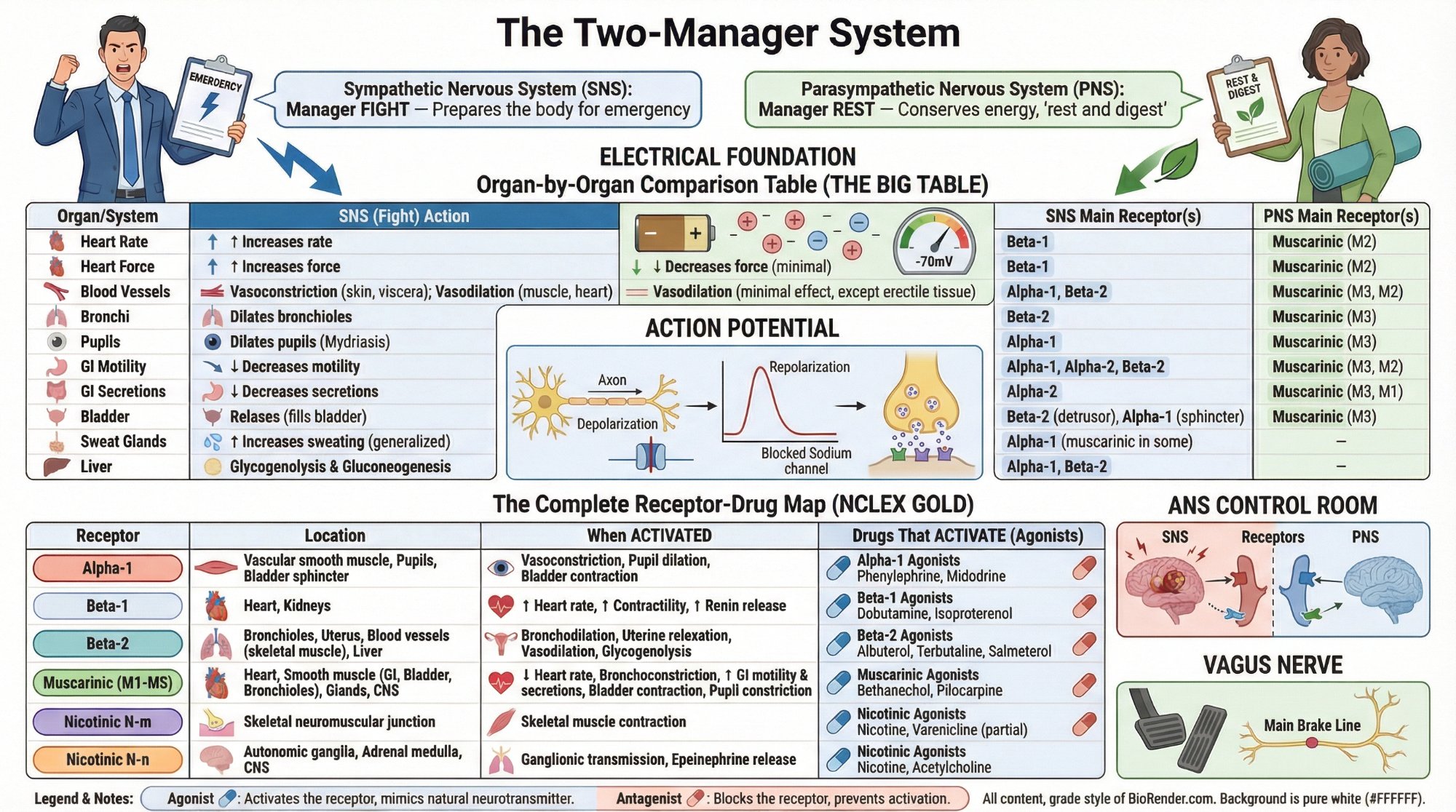
Could you sort 150 different drugs by the receptor each one targets, from the heart to the gut? This NGN-framed quiz draws 20 random questions per session from a bank of 150+ items spanning cardiovascular (alpha/beta adrenergic, angiotensin, calcium channels, Na+/K+-ATPase), respiratory (beta-2, muscarinic, histamine, leukotriene), neurological (dopamine, GABA-A, opioid, serotonin, acetylcholine), gastrointestinal (H2, proton pump, 5-HT3), renal/diuretic, and endocrine/metabolic receptors. Each item pairs a rationale with a teaching point, clinical pearl, and nursing alert, with category-scored results.
Topics: Pharmacology, Receptors, Quiz, NGN, Cardiovascular, Neurological, Endocrine, NCLEX-PN
Pulmonary Immersion: The Air Factory
Pulmonary immersion — the lung as an oxygen factory whose one mission, moving O2 in and CO2 out, can fail at three steps: ventilation, diffusion, or perfusion. You first map the five regions of the lung and meet the cell-factory workers behind every symptom — Goblet and Cilia (mucus and the escalator, rhonchi), Squeeze with its beta-2 and M3 receptors, Mast with histamine and leukotrienes, the Type I and surfactant-making Type II pneumocytes, and the alveolar macrophage. Disease is then read by layer: asthma and COPD in the airways, pneumonia and edema and ARDS at the alveolus, PE and pneumothorax in the pleural and vascular space, plus TB. A drugs-at-the-receptor section ties bronchodilators (albuterol, salmeterol, ipratropium, tiotropium) to the receptors they hit, and a cue-sorting drill trains you to tell wheeze from crackles from stridor and expected from unexpected findings using a four-tier priority system. NGN unfolding cases apply the six clinical-judgment steps, and the LPN scope stays front and center: collect and report the precise pattern of cues rather than diagnosing the condition.
Topics: Pulmonary, Oxygenation, Perfusion, COPD, Bronchodilators, Respiratory Cues, NGN, LPN Scope
Baseline: Reading Patient History Like a Clinician
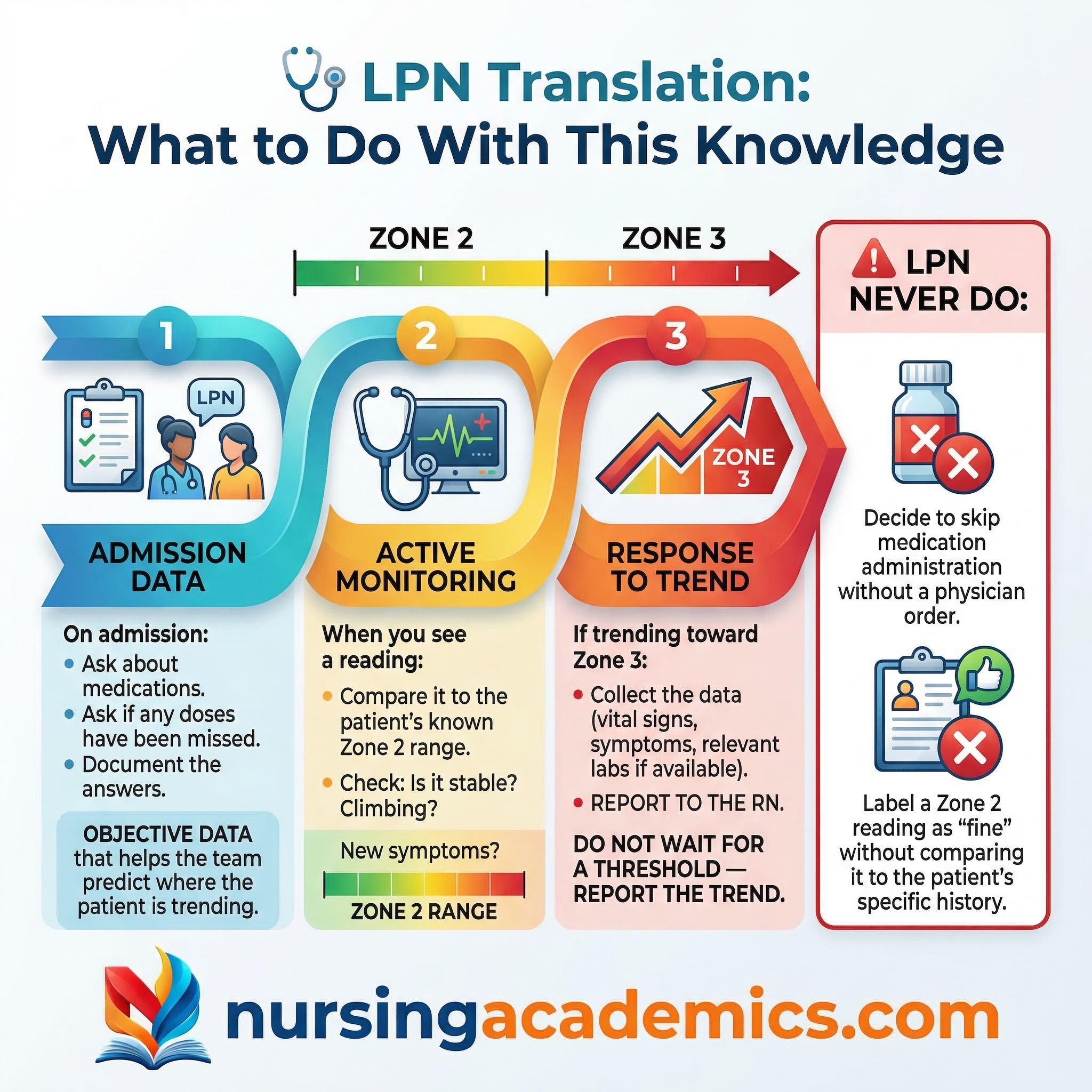
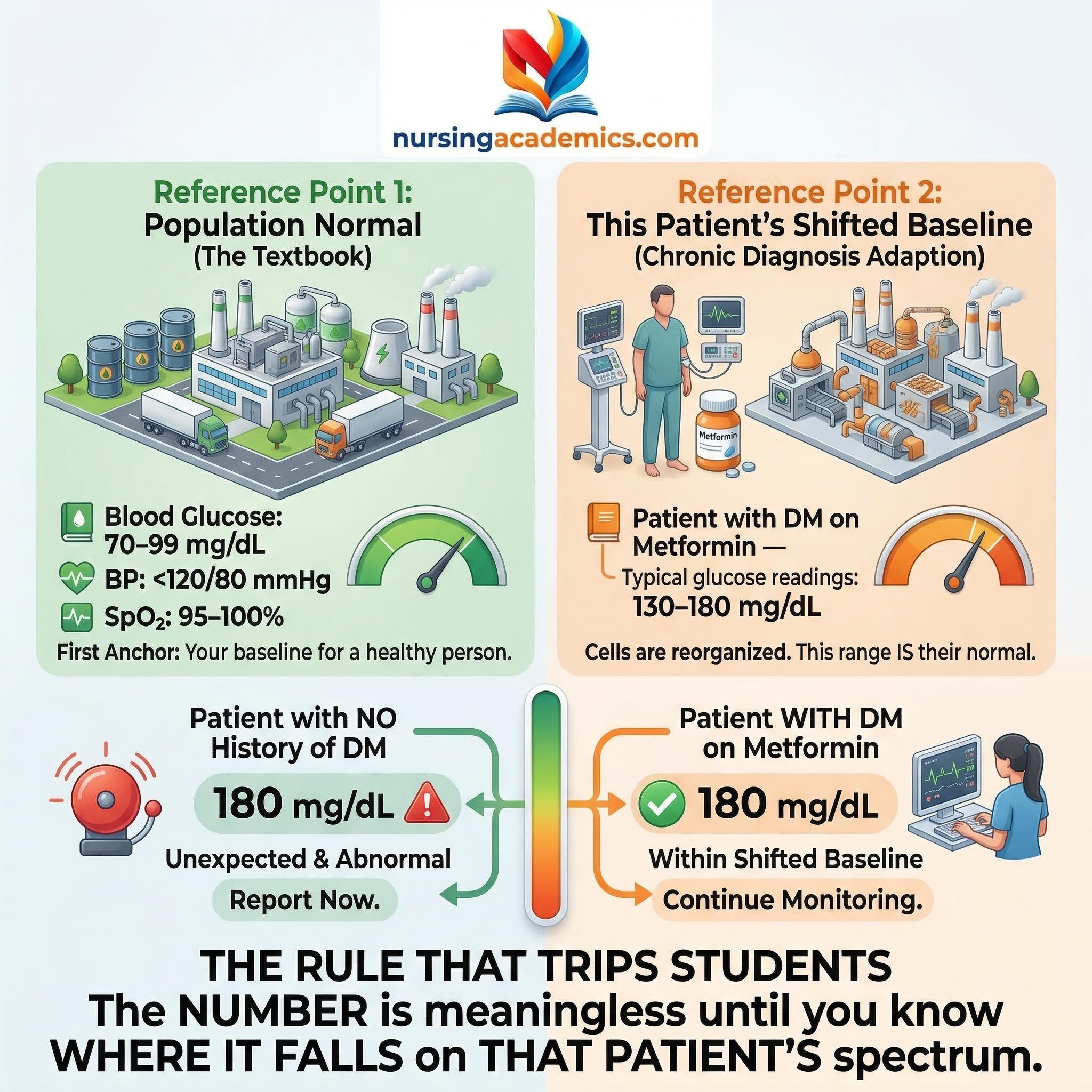
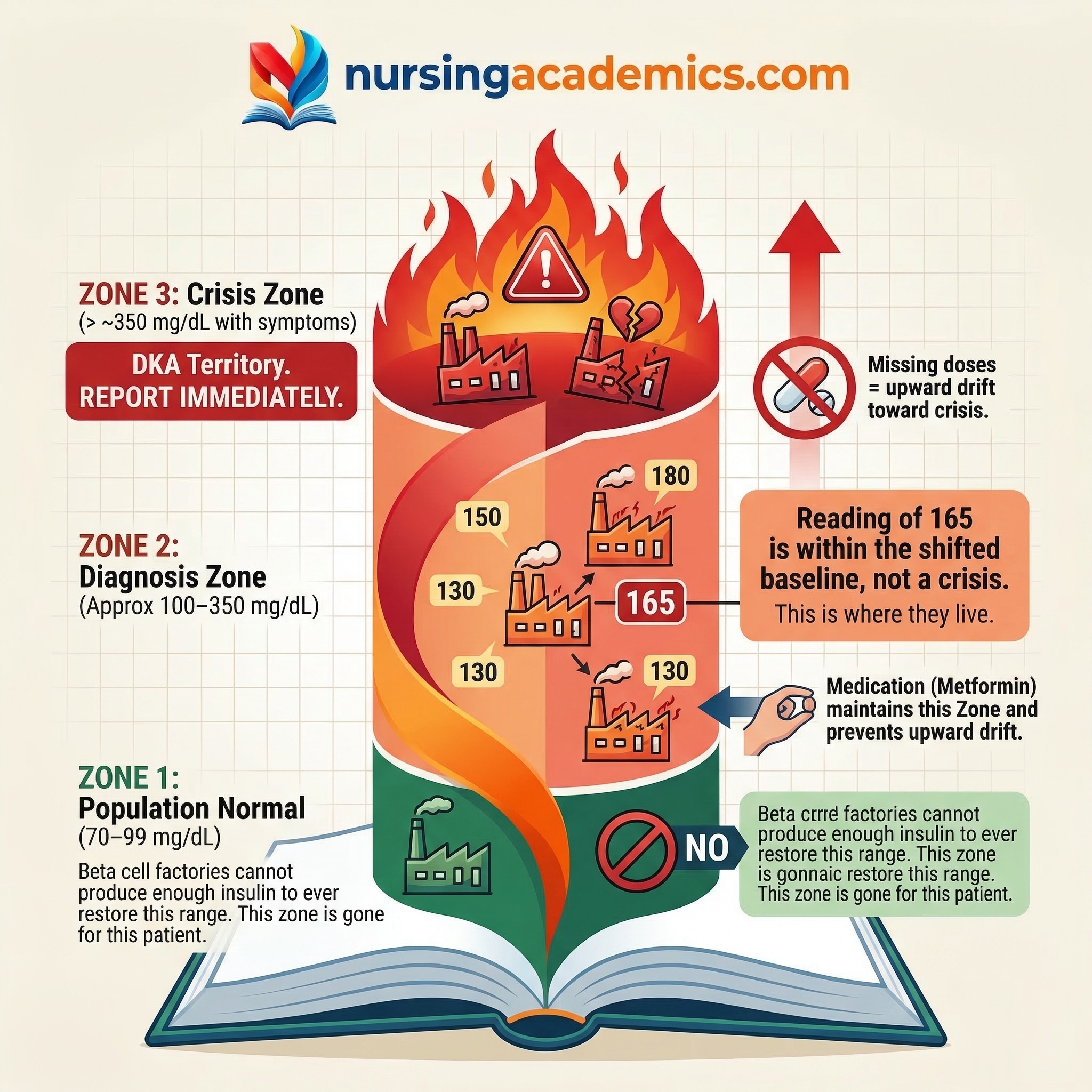
Baseline — a chronic diagnosis resets what 'normal' means for your patient, and the history tells you where their cells live now. This tutorial teaches you to hold two reference points at once: population normal (glucose 70–99, BP <120/80, SpO2 95–100%) and the patient's own shifted Zone 2 baseline, and to read every finding on a three-zone spectrum of population-normal, diagnosis zone, and crisis. Using diabetes as the master example, it traces high glucose down to the cell — failed insulin keys, closed GLUT-4 doors, fat-burning ketones, osmotic diuresis, and the DKA cascade past about 350 mg/dL — then applies the identical framework to hypertension and COPD. It frames medication as the guardrail that holds a patient in Zone 2 and works the two traps that drive inpatient glucose up: home meds held on admission and an inaccurate or undisclosed medication list, compounded by the stress-hormone surge (cortisol, epinephrine) of illness. You practice the four-step LPN habit — translate the history, expect the expected, compare the current finding, and report the true change — with ready-to-use report scripts and scenarios. This stays in LPN scope: collect the trend, ask about home medications, compare to the patient's baseline, and report; never diagnose or adjust the medication yourself.
Topics: Baseline, Expected vs Unexpected Cues, Data Collection, Diabetes, Clinical Judgment, Medication Reconciliation, NGN, LPN Scope
Clinical Judgment Reference: Zone by Zone
Clinical judgment reference for the LPN — the framework and the stored values that turn NCLEX-PN questions into a repeatable decision process. The tutorial opens with the NCSBN six-skill Clinical Judgment Measurement Model and the chronic-versus-acute-versus-new frame, then teaches you to load a patient's baseline from the history using four questions before classifying any cue. You drill expected versus unexpected cues, the Direction Rule that reports a value trending toward crisis before it arrives, actual versus potential problems, and the three-zone system that ranks priority. Perfusion-chain panels for oxygen, glucose, cardiac output, vascular integrity, and electrolytes tie each number to the failing cell factory, and a quick-reference table plus 64 flip cards and a recall quiz lock in vital signs, ABGs, glucose, cardiac enzymes, and drug levels with their hold parameters. After working through it you can read a stem, decide whether a finding is expected for that patient, and identify the single priority to act on. The LPN role stays fixed throughout: recognize the change, collect the data, monitor the response, and report — never assess, diagnose, or evaluate independently.
Topics: Clinical Judgment, NGN, NCSBN Model, Baseline, Expected vs Unexpected, Prioritization, Lab Values, Hold Parameters
The Patient's Story: History as Your Context Lens
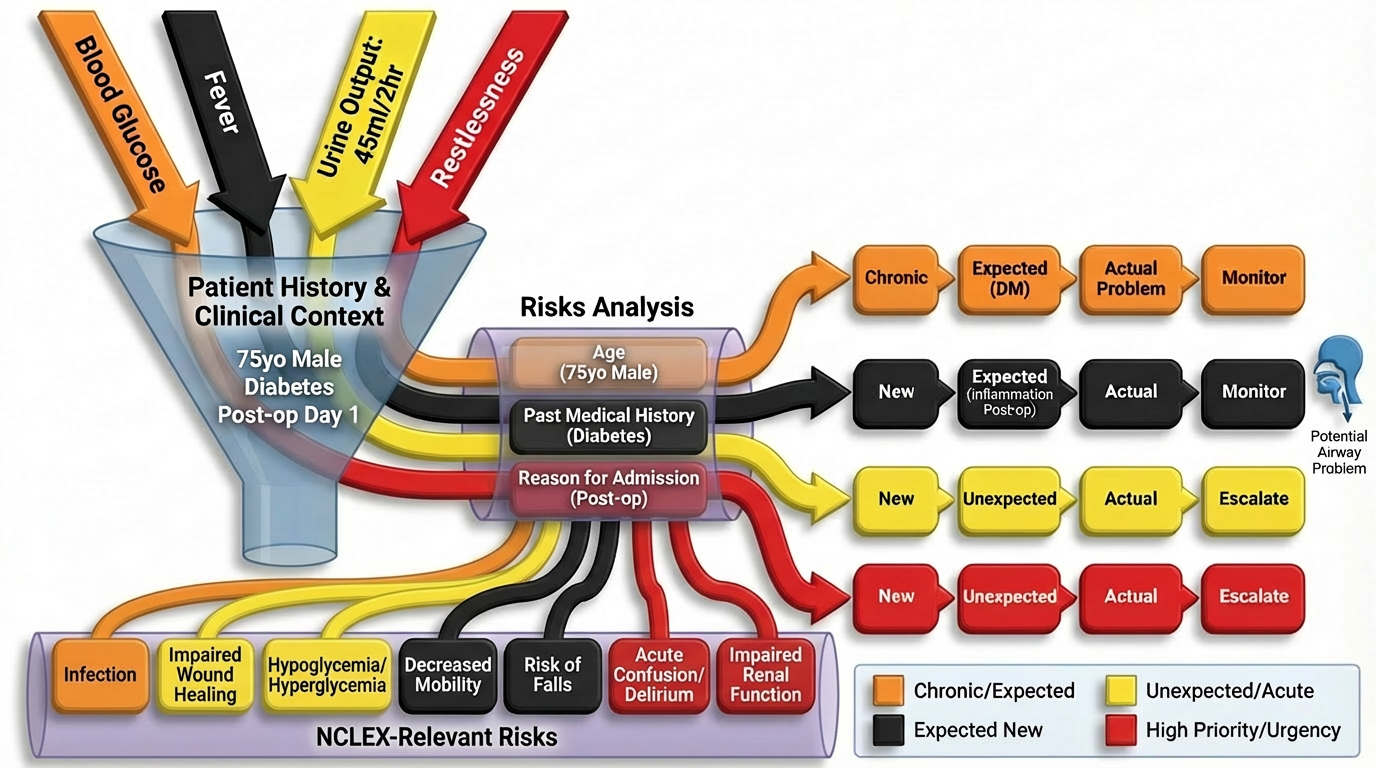
Patient history as your context lens — read the story before you read the cues. The tutorial teaches the two-filter method: run every cue through Filter 1 (does the patient's history explain it?) and Filter 2 (does the clinical context explain it?); if neither explains it, the cue is new, unexpected, and reported. It uses a 72-year-old with type 2 diabetes on postoperative day 1 after a left hip ORIF to show why a glucose of 180 is expected while a temp of 104.2°F is not. 'Same cue, different story' pairs identical findings — HR 110, glucose 58, temp 100.8 — in different patients to prove the history changes the correct answer. It then adds two priority lenses, acute beats chronic and actual beats potential, and stacks them into a decision cascade: actual over potential, acute over chronic, unexpected over expected, physiological over psychosocial. Everything ties to NGN Recognize Cues and the LPN's job to collect data and report. Afterward you can sort cues as expected or unexpected and decide which to report first.
Topics: Recognize Cues, Expected vs Unexpected, Acute vs Chronic, Actual vs Potential, Clinical Judgment, NGN, Baseline, LPN Scope
Context → Expect → Compare: The Cue Sorting Machine
Context, Expect, Compare — build the mental sorting machine that separates expected cues from the unexpected ones that must be reported. This third Pre-Exam Immersion lesson trains the first step of NGN clinical judgment: read the five layers of context (age, chronic disease, reason for admission, surgical or clinical status, medications), set your expectations BEFORE you look at the data, then compare each actual cue and classify it. It anchors on ABCDEFG perfusion as Step Zero, teaches reading vital signs in pairs — heart rate with blood pressure, respiratory rate with SpO2 — to tell compensation from decompensation, and drills the Direction Rule: a cue is unexpected when it goes the opposite way from what the condition produces OR goes so far in the expected direction that perfusion is threatened (glucose 206 is expected in a stressed diabetic; glucose 58 or 486 is not). An expectation table works through common contexts — Type 2 diabetes, hypertension on lisinopril, post-op day 1, COPD, CHF on diuretics, and warfarin with INR targets — before 25 practice scenarios span the lifespan, from a TKR glucose crash and CHF with an INR of 4.8 to DKA, COPD exacerbation, STEMI, preeclampsia, sepsis, sickle cell crisis, pyloric stenosis, postpartum hemorrhage, and major burns. Throughout, the work stays in LPN scope — collect and report cues to the RN, never diagnose — so that afterward you can read any patient card, set expectations, classify every finding, and name what the patient is at risk for.
Topics: Recognize Cues, Expected vs Unexpected, Clinical Judgment, ABCDEFG, Direction Rule, Perfusion, Prioritization, NGN
The Mastery Drill: Cold-Recall of NCLEX-PN Facts
The Mastery Drill — the vital signs, labs, drugs, and safety rules you must know cold for the NCLEX-PN. This is a rapid-fire, mastery-gated drill of the facts that require pure recall: you must score 100% on each 5-question block before advancing. It opens with the ABCDEFG Perfusion Check (Glucose + Oxygen produces ATP) and drills adult and pediatric vital-sign ranges; WBC, ANC, and H&H; electrolytes and coagulation; cardiac drugs, insulin, pain management, and high-alert medications; safety and infection-control rules; positioning; scope of practice; and prioritization. It then covers maternal-newborn content (prenatal, labor and delivery, postpartum, newborn), pediatric safety and developmental milestones, Erikson and Piaget, and mental health, ending at a final gate. Each rationale explains the number through the Cell Factory Method so you learn why it matters, and the LPN stays within collecting data and reporting. Afterward you can recall the ranges, hold parameters, and rules without hesitation under exam conditions.
Topics: Vital Signs, Lab Values, Electrolytes, Perfusion, ABCDEFG, Insulin, High-Alert Meds, Med Safety
Fundamentals Immersion: Coordinated Care, Comfort & Safety
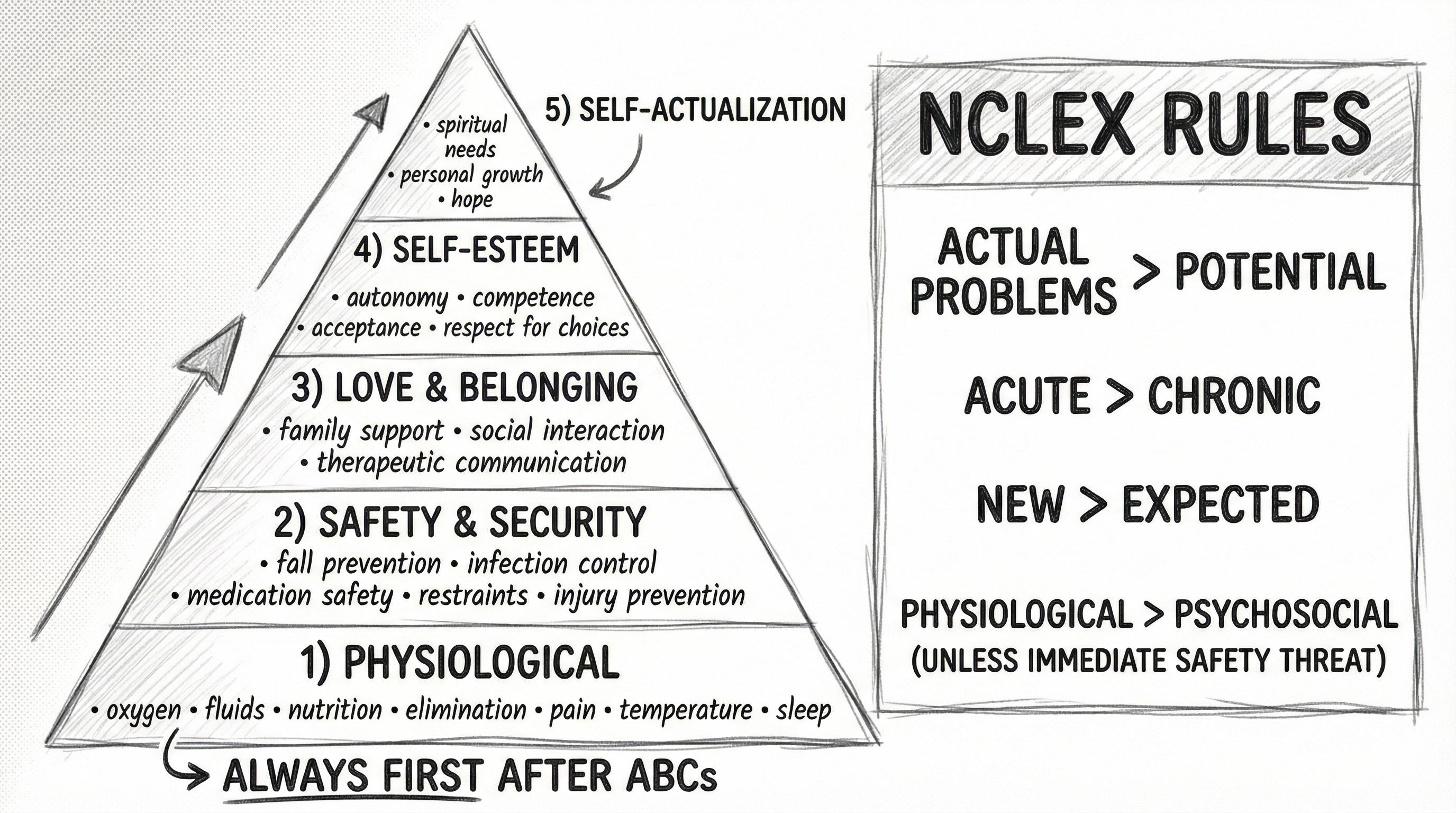
Fundamentals for the NCLEX-PN — coordinated care, health promotion, basic comfort, and safety in one immersion. Coordinated Care covers Maslow prioritization, the Five Rights of delegation and the LPN/RN/UAP delegation grid, the priority stack, advance directives, HIPAA and client rights, documentation, SBAR reporting, and discharge planning. Health Promotion adds Erikson and Piaget stages, age-based vital sign norms, older-adult physiological changes, and screening schedules. Basic Care & Comfort walks named positions, hygiene, fall prevention, pain scales, restraints, body mechanics, and therapeutic diets, while Safety & Infection Control covers standard and transmission-based precautions, pressure-injury staging and the Braden scale, IV solution types, the 15-minute blood transfusion rule, and the six rights of medication with high-alert drugs. It closes with an NGN cue-sorting drill, four clinical-judgment cases, and a final exam with certificate, holding the LPN to collecting data and reporting throughout. Afterward you can prioritize with Maslow and ABCs, delegate safely, and apply precautions and safety rules cold.
Topics: Coordinated Care, Delegation, Five Rights, Maslow, Standard Precautions, Med Safety, NGN, LPN Scope
NCLEX Diagnoses: Baseline & Three-Zone Reference
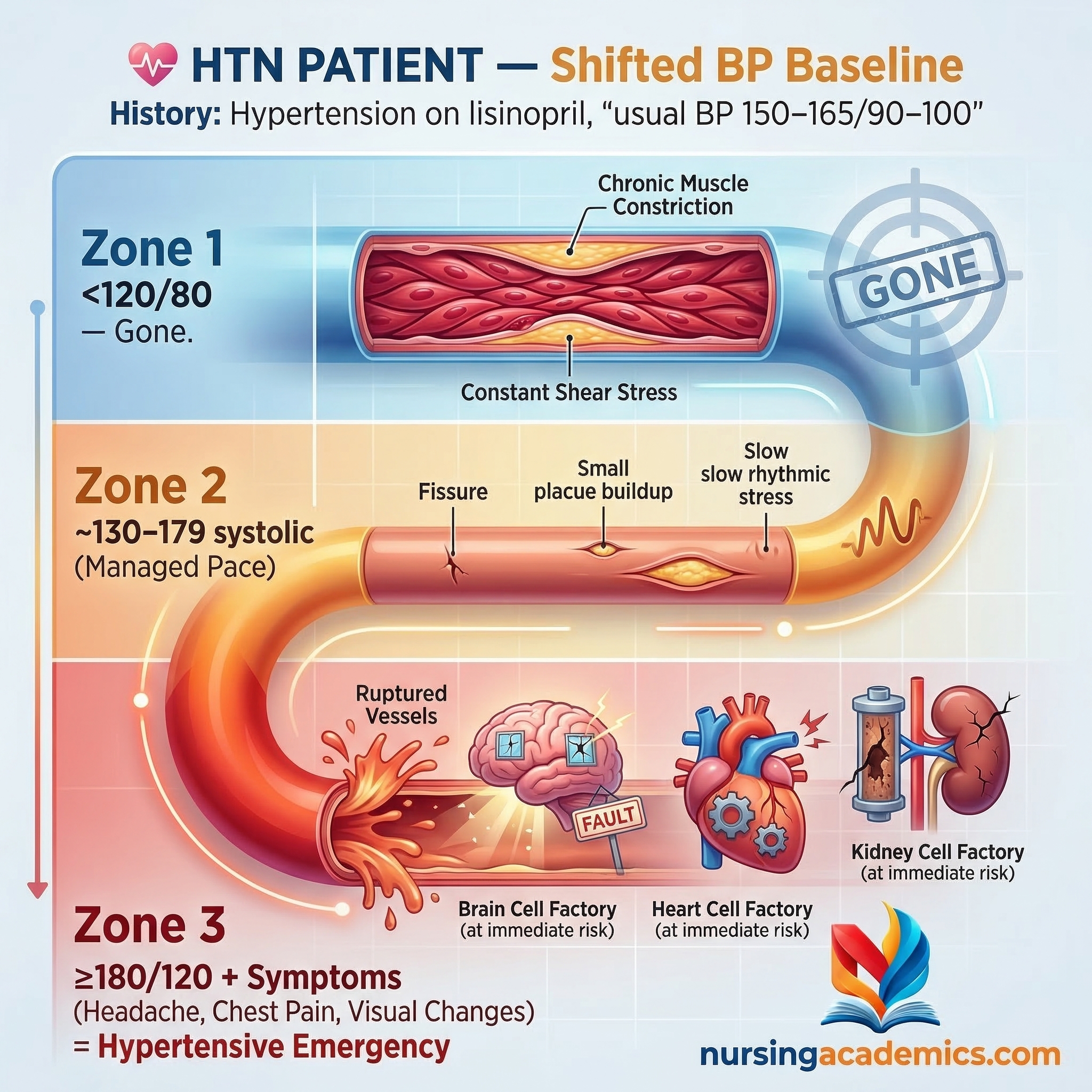
Common NCLEX-PN diagnoses reference — hypertension, heart failure, COPD, chronic kidney disease, CAD/angina, and hypothyroidism, each mapped from cell to bedside. For every condition you learn what breaks at the cellular level, the green-amber-red three-zone spectrum from population normal to managed baseline to crisis, the key medications, and a worked NCLEX scenario. Specifics include the CHF danger triangle (furosemide washing out potassium leading to digoxin toxicity, with digoxin therapeutic at 0.5–2.0 ng/mL), the COPD rule to never exceed prescribed oxygen, hyperkalemia above 6.0 as a CKD cardiac emergency, the nitroglycerin three-tablet protocol for angina, and the high-TSH/low-T4 pattern of undertreated hypothyroidism. Each diagnosis contrasts the expected Zone 2 findings a patient lives with against the unexpected Zone 3 cues that signal decompensation, such as daily weight gain in heart failure or new confusion in myxedema. You come away able to state a patient's baseline and recognize the vital signs and labs that mean they are compensating or in danger. In LPN scope you collect and report those cues to the RN and give ordered medications safely — you do not diagnose or evaluate independently.
Topics: Baseline, Three-Zone System, Hypertension, Heart Failure, COPD, Hyperkalemia, Digoxin, Med Safety
Foundations: Bedside Tubes and Cellular Physiology
Bedside tubes for the LPN — NG tubes, the Salem sump, enteral feeding, Foley catheters, chest tubes, and tracheostomies mapped to the cell factory each one protects. Every device is tied to the cells it touches — smooth muscle and parietal cells at the NG tube, detrusor and urothelium at the Foley, mesothelial and surfactant-making pneumocytes at the chest tube, ciliated and goblet cells at the trach — so you know which cue means that factory is failing. You learn the tested safety rules: verify NG placement by X-ray or aspirate pH at or below 3.5 and never by auscultating injected air, keep the head of bed up and never feed flat, hold a tube feeding when gastric residual exceeds about 250 mL, and report urine output under 30 mL/hr immediately. It also covers the Salem sump air-vent pigtail kept above the stomach, the flush-medicate-flush-clamp administration protocol, replacing the foreskin after male catheterization to prevent paraphimosis, the CAUTI biofilm timeline, and never clamping a chest tube without an order. Aspiration and accidental decannulation are drilled as emergencies with a clear stop-position-suction-oxygen-notify sequence, reinforced by NGN practice questions. Throughout, LPN scope holds: recognize the cue, collect data, act within protocol, and report to the RN — the RN assesses and diagnoses.
Topics: NG Tube, Foley Catheter, Chest Tube, Tracheostomy, Enteral Feeding, Aspiration Precautions, LPN Scope, Data Collection
The Question-Attack Strategy: Three Skills for Every NCLEX-PN Item
Question-Attack Strategy for the LPN — a three-skill system for reading and cracking any NCLEX-PN question. You first Identify the Question by reading the last sentence and naming its type — priority, first action, next action, best response, positive vs negative teaching, SATA, delegation, or dosage calculation — then run the 10-second ABCDEFG Perfusion Check to catch any emergent cue that is harming the patient right now. Next you Identify the Cues (vitals read in pairs like HR+BP and RR+SpO2, labs such as K+, glucose, WBC, Hgb and INR, urine output, LOC, and symptoms) and Sort the Cues using Context and History across the emergent, urgent, expected, and new/unexpected dimensions, with a tiebreaker for when several cues are all urgent. The tutorial then applies the method through LPN-scope pharmacology (therapeutic vs side vs adverse effects, high-risk classes, Give/Hold/Stop/Report/Teach) plus maternal-newborn and pediatrics frameworks, all reinforced by interactive click-the-cue practice blocks with full rationales. Throughout it keeps you in LPN scope — collect and report cues, never independently assess, diagnose, or evaluate — so you can work each item safely and consistently.
Topics: Question Strategy, Cues, Perfusion, ABCDEFG, Prioritization, Pharmacology, LPN Scope, Clinical Judgment
Pharmacology Immersion: Drugs by Cell-Factory System
Pharmacology immersion — the most-tested NCLEX-PN drug classes organized through the Cell Factory lens so each drug's action, danger, and nursing check makes sense together. It opens with the fundamentals (receptor basics, drug-name suffixes, and how drugs are absorbed, distributed, metabolized, and excreted), then works class by class: cardiac and vascular, respiratory, pain and CNS, mental health, endocrine and diabetes, anticoagulants with their labs and antidotes, chemotherapy, GI and inflammation, and renal and high-alert medications. For every class you learn the expected action, the key adverse effects, and the specific LPN monitoring and administration checks — apical pulse and hold parameters, potassium and INR trends, blood sugar before insulin, respiratory rate before opioids. Built-in dosage-calculation practice and NGN question banks let you rehearse applying each drug safely at the bedside. The tutorial holds you to LPN scope throughout: collect the pre-administration data, report the cue, and never diagnose or adjust the plan independently.
Topics: Pharmacology, Med Safety, Drug Classes, Hold Parameters, Dosage Calculation, High-Alert Medications, NGN, LPN Scope
Build the Baseline: Two-Patient Drill
Build the Baseline — decide what a value should be for THIS patient before you judge the number. This drill teaches you to construct a patient's Zone 2 baseline from four sources — the diagnosis list, the medication list, documented home values, and the current clinical context — before you read any result. It applies the three-zone framework to a diagnosed patient (population normal 70–99, a diabetic's Zone 2 of 126–349, crisis below 54 or at/above 350) and adds the treatment-effect trap: an insulin-driven glucose of 62 looks textbook-normal but is actually overcorrection for that patient. Same-value, two-patient cards prove the point — one number means different things depending on the baseline you built — because treatment moves the number, not the baseline. A timed speed drill runs patient cards across cardiovascular, respiratory, renal, endocrine, neurological, hematology, GI/hepatic, and drug-level systems, followed by NGN-style practice questions. You finish able to recognize a relative change, classify it as expected or unexpected, and report it instead of dismissing a value that only looks normal — all within LPN scope: collect, compare, and report.
Topics: Baseline, Expected vs Unexpected Cues, Clinical Judgment, Data Collection, Lab Values, Medication Administration, Overcorrection, NGN
Receptor Systems Quiz: Water, Oxygen, Glucose & Ion Channels
Can you trace a single receptor signal from the cell membrane all the way to the clinical effect you'd chart? This category-based quiz pulls 20 random questions from selected receptor systems: water and ADH management, oxygen sensing and chemoreceptors, glucose and insulin signaling, ion channels, nervous system receptors, cardiovascular receptors, smooth muscle receptors, and hepatic receptors. Each question includes a rationale, clinical pearl, drug connection, and memory aid.
Topics: Pharmacology, Receptors, Quiz, Ion Channels, Glucose Regulation, Cardiovascular, NCLEX-PN
NGN-Style Receptor Pharmacology Quiz: 100 Questions with SATA
Can you still pick the right answer when a question asks you to select every correct option, not just one? Five 20-question sets (100 questions total) in Next Generation NCLEX style mix standard single-answer items, select-all-that-apply questions with partial credit, and drag-and-drop sequencing items across receptor systems including water/ADH balance and oxygen sensing. Each item includes a rationale, clinical pearl, drug connection, and memory aid, with per-set and cumulative scoring.
Topics: Pharmacology, Receptors, Quiz, NGN, Select All That Apply, NCLEX-PN
Who Do You Delegate to the UAP?
Who Do You Delegate to the UAP trains learners to separate stable task work from nursing judgment. It drills what can be delegated, what stays with the nurse, and when a cue makes the patient too unstable for routine assignment.
Topics: Delegation, UAP, Stable Patient, LPN Scope, Prioritization, Safety
Who Do You See First?
Who Do You See First teaches priority decisions as a consistent safety stack. Learners rank patients using airway, breathing, circulation, perfusion, acute change, instability, Maslow, and LPN-scope action.
Topics: Prioritization, ABCs, Maslow, Acute vs Chronic, Unstable Patient, Clinical Judgment, Perfusion
Who Do You Delegate to the UAP?
Who Do You Delegate to the UAP trains learners to separate stable task work from nursing judgment. It drills what can be delegated, what stays with the nurse, and when a cue makes the patient too unstable for routine assignment.
Topics: Delegation, UAP, Stable Patient, LPN Scope, Prioritization, Safety
Who Do You See First?
Who Do You See First teaches priority decisions as a consistent safety stack. Learners rank patients using airway, breathing, circulation, perfusion, acute change, instability, Maslow, and LPN-scope action.
Topics: Prioritization, ABCs, Maslow, Acute vs Chronic, Unstable Patient, Clinical Judgment, Perfusion
Welcome to Phase 3
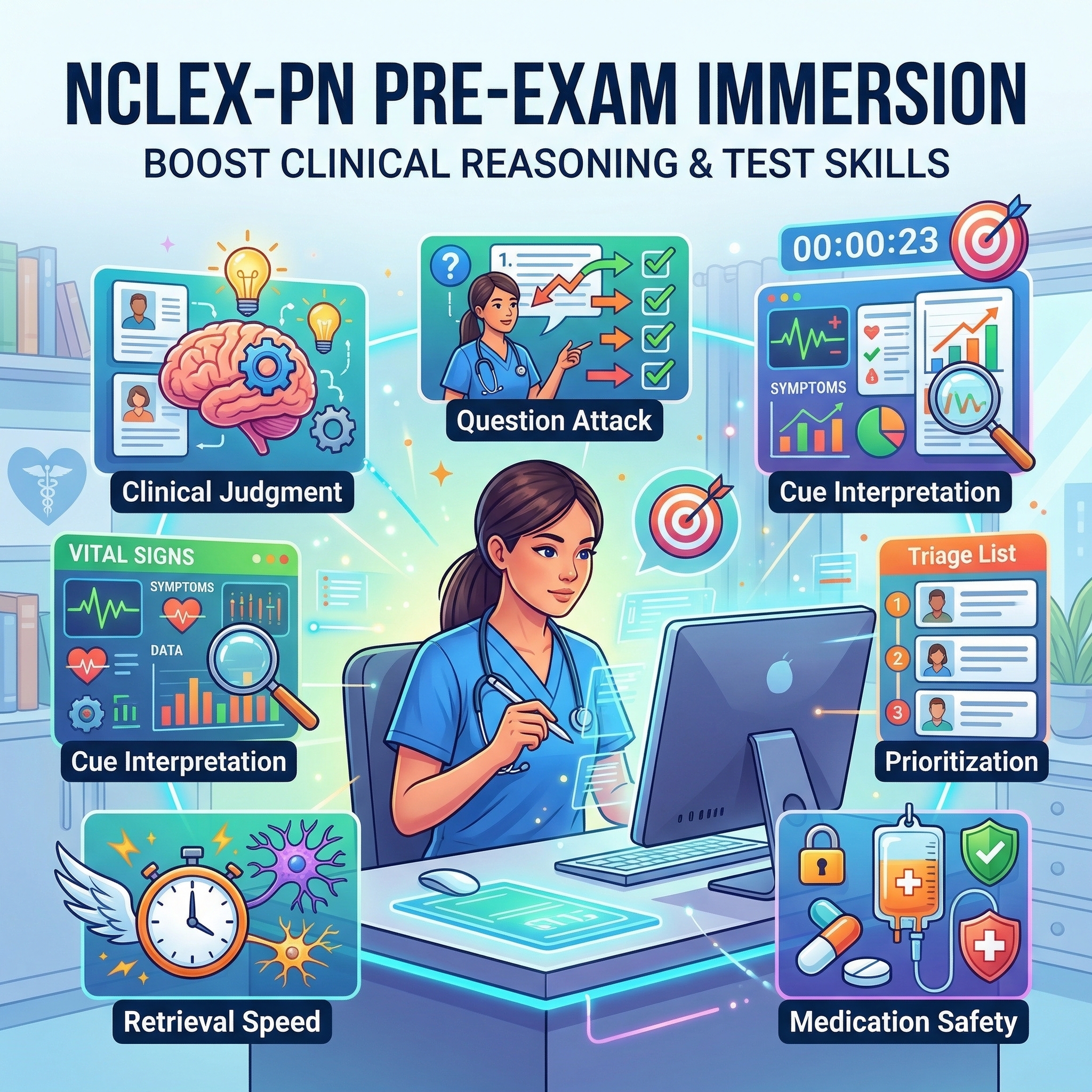
Welcome to Phase 3 — the pre-exam immersion that turns everything you have studied into exam-ready thinking. This introduction sets the tone for the final stretch: the content is learned, so the work now is understanding how the NCLEX-PN tests you and how to answer with a safe nurse's judgment. It previews the computer-adaptive test — 85 to 150 questions over as long as five hours, with harder questions being a sign you are answering well — and the exam-day habits that protect your score: read for keywords, trust your first careful choice, take breaks, and eliminate toward the safest, most patient-centered answer. Above all it names the single question behind every item — can this LPN keep the patient safe. You start Phase 3 knowing exactly what the immersion will build toward and why the preparation you have done is enough.
Inflammation Cascade: Bone Marrow to Bedside Cue Recognition
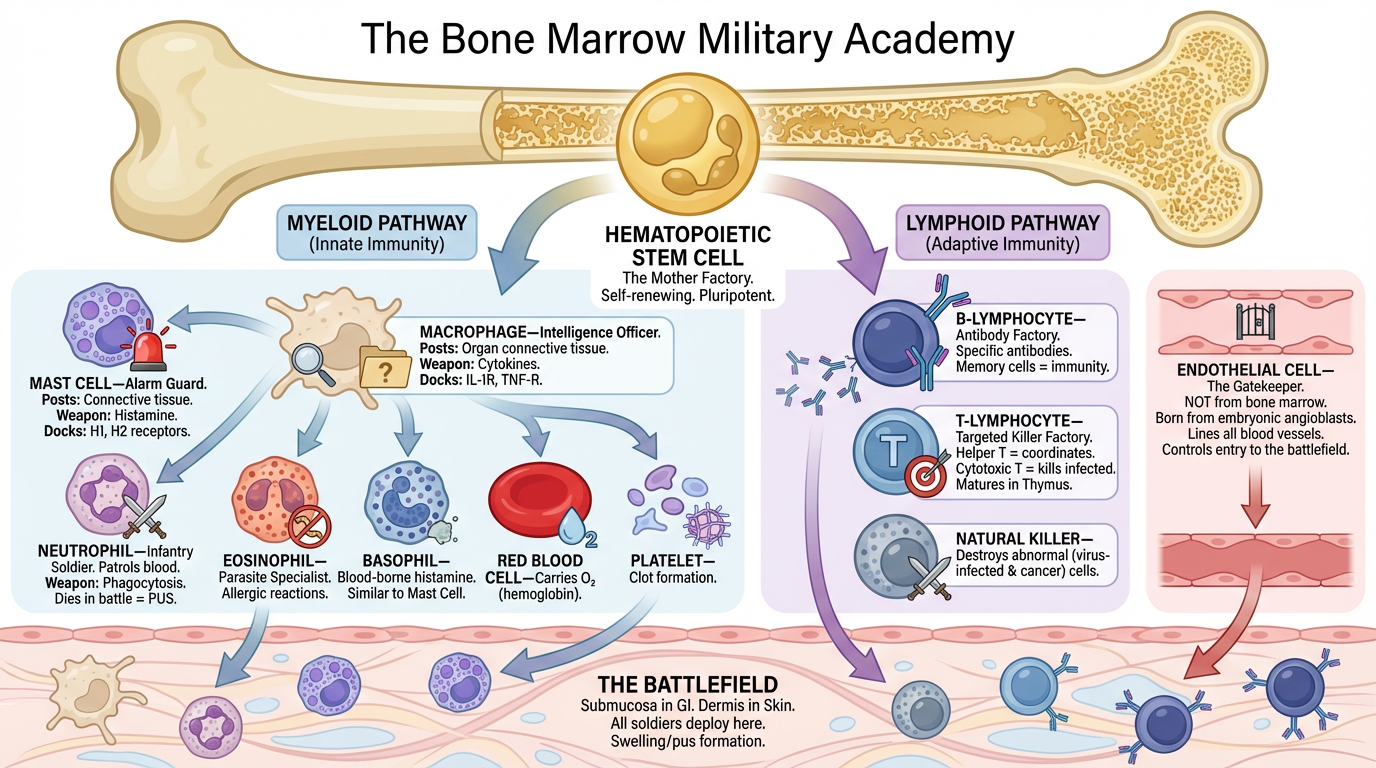
Every red, warm, swollen area on a patient traces back to a specific cell doing a specific job, can you name it? Walk the full inflammatory cascade from where defenders are produced in bone marrow, through the mast cell, macrophage, neutrophil, and endothelial cell response, to the five cardinal signs plus fever. Learn to calculate the absolute neutrophil count (ANC) from a CBC differential and recognize a left shift as a sign the bone marrow is releasing immature bands under extreme demand. Collect WBC trends, temperature, and site findings, and report a fever in a neutropenic patient as a Tier-1 emergency, then see the same cascade drive gastritis, appendicitis, Crohn's disease, and anaphylaxis.
The Cell Factory Method: A Nursing Bridge
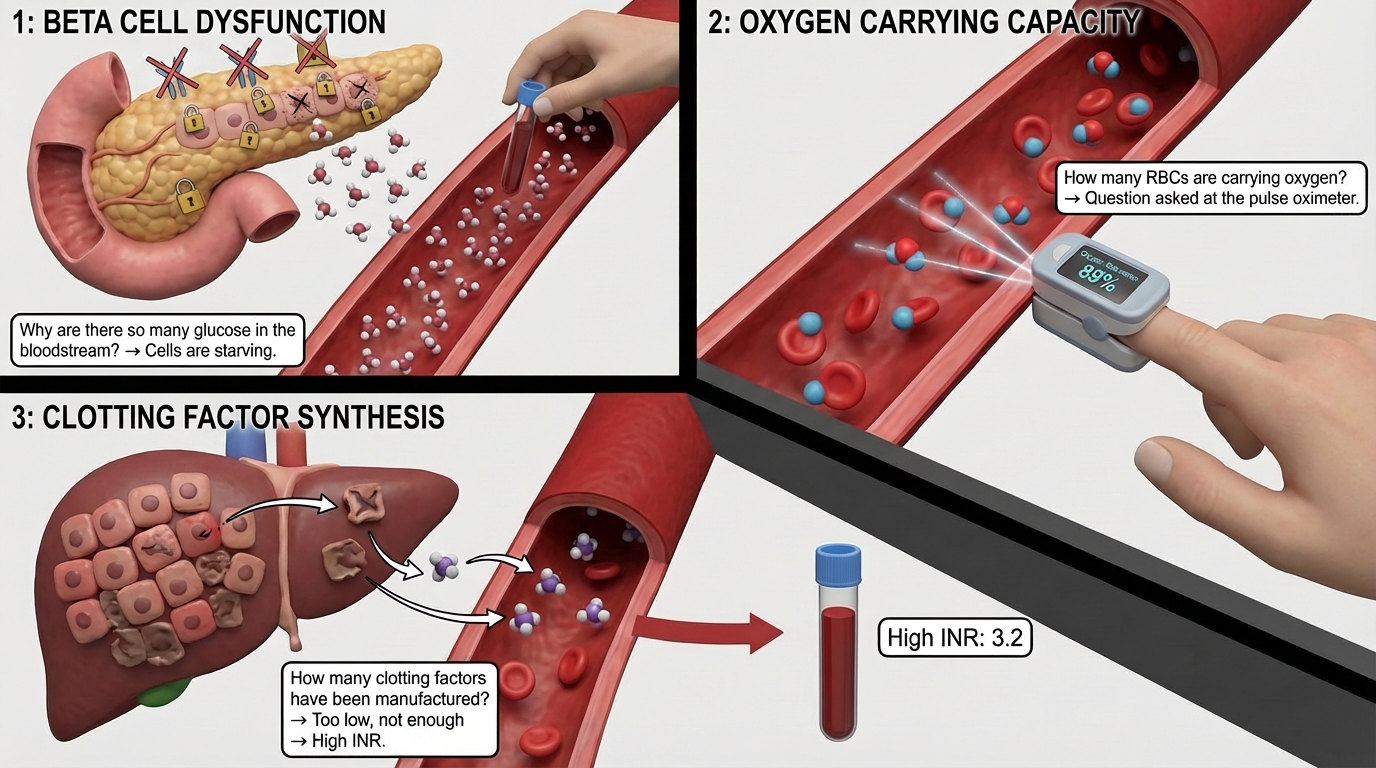
The Cell Factory Method — every cell is a water-filled factory that runs on one fuel, and that single idea bridges biology to safe nursing. This foundational lesson teaches the core equation Mitochondria + Oxygen + Glucose produces ATP, and why no oxygen reaching the cell means no ATP and every department shutting down at once — the same failure behind myocardial infarction, stroke, septic shock, respiratory failure, and acute kidney injury. It walks through the beta cell's mandate (nucleus blueprint, rough ER assembly line, Golgi shipping, insulin exocytosis) as a worked example, then the Four Laws every cell obeys: ATP is the only currency, receptors are the only authorized signal, the body compensates first and crashes second, and every symptom traces back to a failing department. Perfusion-first thinking is established as the through-line for the entire course. Within the factory framework the LPN is the factory-floor observer who collects cues — vital signs, skin color, urine output, lung sounds, lab values — recognizes the pattern of a department beginning to fail, and reports to the RN, never diagnosing or assessing independently. Afterward a learner can map any symptom back to a cell and organelle and explain why perfusion is central to every nursing emergency.
Inflammation: Protective vs Harmful
Inflammation — why redness, warmth, swelling, and pain are the body's defense at work, not the disease itself. Using the Cell Factory Method, this lesson traces the whole cascade: the bone marrow headquarters that builds every blood cell, the four key agents (mast cell, macrophage, neutrophil, endothelial cell), and how histamine acts on H1 receptors (redness, swelling, wheezing) versus H2 receptors (stomach acid). You follow the seven-step sequence to the five cardinal signs plus fever and elevated WBC, learn to calculate the absolute neutrophil count and recognize a left shift, and connect the drug families — NSAIDs, corticosteroids that must be tapered, H1 blockers, H2 blockers, and PPIs — to the exact step they interrupt. The same sequence is then read across gastritis, appendicitis, Crohn's, and anaphylaxis, and the Anchor technique shows how to find the one cue that matters. Throughout, the LPN role stays clear: collect the data, recognize the cue, connect it to the failing cell factory, and report it to the right person at the right time.
Disease Navigator: How to Read the Pattern
Disease Navigator — read any disease as a specific cell factory failing at a specific department, then trace it forward to the clinical cue you collect at the bedside. This lesson maps ten body systems — cardiovascular, respiratory, neurological, GI, renal, endocrine, musculoskeletal, integumentary, immune/blood, and eye/ear — from the failing cell to NCLEX-PN cues to NGN-style practice. Concrete anchors include MI as cardiomyocytes losing oxygen (troponin, ST elevation), heart failure cues with BNP and furosemide, digoxin held for an apical pulse under 60, COPD and the hypoxic drive with an O2 target of 88–92%, asthma's silent chest, stroke FAST screening, and Cushing's triad signaling rising ICP. It teaches cue priority tiers — Tier 1 emergent (chest pain with diaphoresis, SpO2 under 90, absent pulse), Tier 2 new or unexpected, Tier 3 expected or chronic — plus key drugs at the receptor level. The Three-Lane Rule keeps the LPN in scope: collect data, monitor, document, report, reinforce teaching, and give ordered meds, while the RN assesses, diagnoses, and plans and the UAP handles stable vitals and hygiene; 'assess' is flagged as the RN trap word. Afterward a learner can separate expected from unexpected findings, prioritize which cue to report first, and hand off accurately to the RN.
From Knowledge to Application
Clinical judgment for the NCLEX-PN — how to turn memorized facts into the six-step reasoning the Next Generation exam actually scores. This lesson walks through the NCSBN Clinical Judgment Measurement Model — recognize cues, analyze cues, prioritize hypotheses, generate solutions, take action, evaluate outcomes — and maps each skill onto the Cell Factory Method. You learn to load the patient's baseline from the history first, then classify every cue as expected or unexpected and sort it as chronic, acute, or new. The acute-beats-chronic rule and the three-zone system (population normal, diagnosis zone, crisis) give you a repeatable way to pick the priority finding instead of guessing. Throughout, the LPN stays in scope — recognize the change, collect the data, and report an unexpected or drifting cue to the RN, without independently assessing, diagnosing, or evaluating. Practice the drills until you read a question stem the way the exam expects.
Baseline: The Starting Point for Clinical Judgment
Baseline — you cannot spot an abnormal finding until you know the normal value cold. This video drills the reference ranges an LPN checks every shift: vital signs (heart rate 60–100, blood pressure about 120/80, respirations 12–20, temperature 98.6°F/37°C, SpO2 95–100%), the core electrolytes and kidney markers (sodium 135–145, potassium 3.5–5.0, BUN 10–20, creatinine 0.7–1.3), and the CBC counts (WBC 5,000–10,000, hemoglobin 12–17, platelets 150,000–400,000). It shows why potassium is the number most dangerous to miss — too low weakens, too high can stop the heart — and how a value like 6.2 instantly reads as a critical cue once you know the range. After watching, you can compare any finding to its normal range, recognize what falls outside it, and report that cue with the right urgency. This stays in LPN scope: you collect and report the data, you do not diagnose it.
Build the Baseline: How the Drill Works
Build the Baseline — start with the textbook normals before you read any single patient's numbers. This tutorial introduction lays down the population-normal anchors you carry into every patient: vital signs (heart rate 60–100, blood pressure 120/80, respirations 12–20, temperature 98.6°F, SpO2 95–100%), the electrolytes and kidney markers (sodium 135–145, potassium 3.5–5.0, BUN 10–20, creatinine 0.7–1.3), and the CBC counts (WBC 5,000–10,000, hemoglobin 12–17, platelets 150,000–400,000). It explains why these ranges are your reference point — a number like potassium 6.2 or platelets 22,000 only becomes a cue once you know where normal sits. Knowing normal cold is the foundation the drill then builds on when a diagnosis shifts what counts as normal for that patient. You leave ready to compare a finding to its range, flag the deviation, and report it. This works entirely inside LPN scope: collect and report, never diagnose.
Expected Cues: What Fits and What Does Not
Expected versus unexpected cues — you cannot recognize what is wrong until you first know what a healthy body system should produce. This lesson walks the green baseline for each system (cardiovascular, respiratory, neurological, GI, renal, musculoskeletal, integumentary, and immune) and then pairs each normal finding against the abnormal cue that gets reported. You learn WHY the change happens at the cell and tissue level — an S3 gallop as fluid sloshes into an overfilled ventricle, crackles as fluid-filled alveoli snap open, cool clammy skin as the sympathetic alarm shunts blood centrally. The work stays in LPN scope: collect and report cues to the RN, recognize when normal has become abnormal, and never diagnose independently. Afterward you can sort any finding as expected (you understand why it is there) or unexpected (stop, cluster the data, and report it).
How to Read and Crack NCLEX Questions
Question strategy — how to read and crack an NCLEX-PN question instead of guessing. Dr. K explains that knowing content is only half the battle; the other half is knowing how the exam thinks, because distractors are built to look right without being the BEST answer. You learn the four parts of every item — the situation, the stem, the correct answer, and three distractors — and the core habit of reading the LAST sentence first so you know exactly what is being asked before re-reading the scenario. When two choices both look correct, you pick the one that is safest and addresses the patient first, and you trust your first careful read rather than second-guessing. Use this to build confidence and stop changing right answers to wrong ones.
ABCs and Perfusion: Working Together
ABCs and safety-first thinking — reading a question so patient safety drives the answer. This lesson breaks every NCLEX-PN item into its situation, stem, correct answer, and three distractors, and teaches you to read the last sentence first to lock onto what is truly being asked. After eliminating two clearly wrong choices, you decide between the remaining two by choosing the SAFEST, most patient-centered action — assess the patient before notifying the provider, and stay at the bedside unless the patient is crashing and you must call for help. Every question is really asking one thing: can this nurse keep patients safe right now? That safety-and-patient-first rule is how the ABC/perfusion mindset shows up in your answer selection.
Delegation for the LPN: What Stays With You
Delegation and LPN scope of practice — what stays with you and what you can hand to a UAP. The video separates what the LPN CAN do (give oral, IM, and subQ medications, collect data and vital signs, perform skills like wound care, catheter care, and suctioning, reinforce teaching the RN already started, and report changes) from what the LPN CANNOT do (the initial comprehensive assessment, nursing diagnoses, IV push meds in most states, delegating to another LPN, and initiating new teaching). It then defines UAP tasks as routine, non-judgment work — vital signs, bathing, feeding, ambulating, measuring intake and output, and weights — and warns that anything requiring clinical judgment stays with the nurse. It also frames prioritization with the ABCs and flags three exam traps: assess versus collect data, delegating to another LPN, and teach versus reinforce. Afterward you can answer 'which task can the LPN delegate to the UAP' and avoid the scope traps.
How to Approach NGN-Style Cases
Approaching case-style questions — a repeatable way to work an NGN scenario without getting lost. The strategy is the same on any item: read the last sentence first to name what is being asked, then re-read the scenario with that question in mind so the details point you to an answer. Eliminate the two choices that are clearly wrong, then choose between the rest by asking what a safe, competent nurse would do FIRST for this patient — not the textbook-perfect or professor-pleasing answer, the safe one. Remember the exam patterns: it rarely wants you to call the provider as the first action, rarely wants you to leave the patient, and almost never wants 'do nothing' or 'continue to monitor' when findings are abnormal. Form your own answer before reading the choices, then commit and move on.
Knowing the Baseline Is the Art
Knowing the baseline is the art — the normal range is what turns a raw number into a cue you can act on. This video fixes the reference ranges that make that judgment possible: heart rate 60–100, blood pressure 120/80, respirations 12–20, temperature 98.6°F, SpO2 95–100%, plus sodium 135–145, potassium 3.5–5.0, BUN 10–20, creatinine 0.7–1.3, WBC 5,000–10,000, hemoglobin 12–17, and platelets 150,000–400,000. It shows the reasoning in action — potassium 3.5–5.0 where a 6.8 means the heart is in danger, and platelets that should sit above 150,000 where a count of 22,000 means bleeding precautions now. Every value outside its range is the patient telling you a system is in trouble, and your skill is reading that signal fast. You come away able to hold each normal in memory, measure a finding against it, and report a true change. LPN scope stays intact: recognize and report the cue, do not diagnose or evaluate it.
Expected vs Unexpected: Hip ORIF Case Study
Hip ORIF case study — apply the expected-versus-unexpected framework to a patient after open reduction and internal fixation of a fractured hip. You practice separating the cues that surgery alone explains — incisional pain, a low-grade temperature up to 100.4°F, hypoactive bowel sounds from anesthesia, limited mobility — from the cues that must be reported. The lesson drills the neurovascular check distal to the repair using the 5 Ps: pain on passive stretch is the earliest sign of compartment syndrome, paresthesia and pallor follow, and pulselessness is a late sign you never wait for. It connects immobility, surgical stress, and age to DVT and PE risk through Virchow's triad, and shows why a sudden fall in SpO2 or a limb turning cool and pale is unexpected. Staying in LPN scope, you collect the cluster — pain character, distal pulses, capillary refill, skin color and temperature, urine color for myoglobin — and report changes from baseline to the RN.
New and Unexpected Cues: When You Find Several
New and unexpected cues — when several findings do not fit the patient's context, you need a system to decide which one you report first. This lesson picks up after you have set expectations and compared the data: it shows how to handle a patient card where more than one cue is unexpected. You run ABCDEFG perfusion as Step Zero, read the vital-sign pairs (heart rate with blood pressure, respiratory rate with SpO2) to tell compensation from decompensation, then rank the unexpected cues with the NCLEX priority rules — actual over potential, acute over chronic, new or unexpected over expected, and physiological over psychosocial unless there is an immediate safety threat. Maslow orders the physiological needs once the ABCs are safe: oxygenation, then circulation and fluids, then the rest. A new or opposite-direction cue that threatens perfusion outranks an expected chronic finding every time. Staying in LPN scope, you collect the full cluster and report the priority findings to the RN so the plan of care can change.
Pharmacology Speed Review: Most-Tested Drugs
Pharmacology speed review — the highest-yield NCLEX-PN drugs paired with the one safety check you perform before each dose. This rapid-fire lesson gives three things per drug: what it does, one critical adverse effect, and one nursing action. It moves through cardiac drugs (metoprolol and digoxin — check apical pulse and hold below 60; furosemide — watch potassium and daily weights; lisinopril — dry cough; warfarin — INR 2 to 3, antidote vitamin K), endocrine drugs (metformin held before contrast dye, the insulin types from lispro to glargine, levothyroxine on an empty stomach), then respiratory, pain, psych, and antibiotic classes (albuterol before the steroid inhaler, morphine held for a respiratory rate under 12, acetaminophen's liver ceiling, lithium and digoxin narrow ranges). You practice the LPN habit of checking the parameter and reporting the cue before administering, never diagnosing. The takeaway is a repeatable pattern — action, danger, nursing check — you can apply to any drug the exam shows you.
Prioritization: Who Do You See First
Prioritization for the LPN — how to decide which patient you see first using the ABCs. The video sets the golden rule (Airway before Breathing before Circulation, in that order) and then layers two tie-breakers: acute beats chronic and unstable beats stable. It works a four-patient example — a heart failure patient asking about lunch, a post-op patient with difficulty breathing and an SpO2 of 88 percent, a diabetic with a glucose of 310 due for insulin, and a wound-infection patient with a temp of 101 — and shows why the breathing/low-oxygen patient is seen first. It also reviews which routine tasks the LPN may delegate to a UAP and the exam traps built around the word 'assess.' Afterward you can rank patients quickly and defend the choice with ABCs, acute-over-chronic, and unstable-over-stable, staying within the LPN's role of collecting data and reporting.
Lab Values: The Investigator's Toolkit
Lab values for the NCLEX-PN — reading potassium, BUN, creatinine, GFR, and drug levels as clues to which cell factory is failing. Working through common conditions like chronic kidney disease, heart failure, and hypothyroidism, this lesson shows what each result means against the patient's own baseline rather than a generic textbook range. You learn the danger thresholds that force a report — potassium above 6.0 as a cardiac emergency, digoxin outside its 0.5–2.0 ng/mL window and made worse by a low potassium, rising BUN and creatinine signaling uremia, and a falling GFR staging kidney loss. It also connects the counterintuitive pairs the exam loves, such as a high TSH with a low T4 meaning undertreated hypothyroidism, and troponin confirming myocardial cell death. The goal is to treat every value as an investigation: what changed, from what baseline, and which finding is the priority to report. Staying in LPN scope, you collect and report critical and drifting labs to the RN — you do not diagnose or adjust the treatment plan.
The Zone System: Reading Vital Signs & Labs
The three-zone system for the NCLEX-PN — sorting every vital sign and lab into population normal, the diagnosis baseline, or crisis. Using conditions like hypertension, heart failure, and COPD, this lesson shows how a green Zone 1 textbook normal shifts to an amber Zone 2 that is normal for that specific patient: a BP in the 150s on medication, an SpO2 of 88–92% on home oxygen, or stable ankle edema and basilar crackles in compensated heart failure. You learn to spot the red Zone 3 line each condition can cross — BP at or above 180/120 with a headache, SpO2 falling below 85%, pink frothy sputum, or a 2–3 lb overnight weight gain that signals fluid overload before the crackles worsen. The lesson reinforces safety rules tied to the zones, like never raising a COPD patient's oxygen above the prescribed rate because it can suppress the drive to breathe. Reading the zone — and the direction a value is trending — tells you whether a finding is expected or a departure that must be reported. In LPN scope you recognize the zone shift, collect the supporting data, and report it to the RN; you do not independently assess or change the plan.
You Are Ready: Final Send-Off Before the Exam
Exam-day send-off — exactly how the NCLEX-PN works and how to walk in ready. This calm final message explains the computer-adaptive test: you answer between 85 and 150 questions across up to five hours, harder questions are a good sign because the computer is confirming your ability, and the question count alone tells you nothing about pass or fail. It gives six practical test-taking tips — eat protein, read for keywords like FIRST, PRIORITY, and IMMEDIATELY, trust your first careful answer, take your allowed breaks, work one question at a time, and use elimination toward the safest, most patient-centered choice. It reframes what the exam is really asking on every item: what would a safe, competent LPN do right now. You leave grounded in the clinical judgment, safety thinking, and Cell Factory foundation you have already built.
The Grand Unification
The Grand Unification — perfusion, homeostasis, compensation, and return to baseline tie all eleven Cell Factory chapters into one repeating pattern. It draws the chapters together around one chain: perfusion delivers oxygen and glucose so mitochondria make ATP, every factory uses that ATP to hold homeostasis, and when a factory is stressed the body compensates first — tachycardia, vasoconstriction, fluid retention — before it decompensates and crashes. Recovery is framed as the return to baseline, which is why knowing a patient's baseline is what makes a new cue meaningful. The lesson reinforces that the same perfusion-first logic explains findings across every system already studied, so disease names matter less than following the cascade from cell to symptom. In this unified picture the LPN's value is recognizing compensation before the crash — collecting the vital signs, intake and output, skin, and lab cues that reveal a factory slipping — and reporting to the RN, while assessment, diagnosis, and evaluation remain outside LPN scope. Afterward a learner can connect any chapter's disease to the shared perfusion-and-homeostasis pattern and explain what returning to baseline looks like.
Expected vs Unexpected Cues
Expected vs. unexpected cues — telling a normal finding from one that must be reported. This video reinforces the core clinical-judgment skill: anchor each finding to the patient's context, then flag the cue that does not fit and threatens perfusion. It stays in LPN scope — collect and report.
Prioritization Walkthrough
Prioritization walkthrough — deciding what comes first when more than one answer looks correct. This lesson walks the reading process step by step: read the last sentence to identify the question, read the scenario with it in mind, and form your own answer before you ever look at the choices. Two of the four options are usually clearly wrong and get crossed out, which leaves the real decision — choosing the action that is safest and most patient-centered. Assessment generally comes before notification, the patient comes before documentation, and 'call the provider' or 'continue to monitor' is rarely the first move when a finding is abnormal. Choose, then move on without second-guessing, because a careful first instinct is usually right.
ABCs and Perfusion: Working Together (Extended)
ABCs and perfusion working together — the extended view of safety-first answer selection. Building on the question-attack method, this lesson has you name the four parts of an item and read the last sentence first, then eliminate two clearly wrong distractors before weighing the two that remain. The deciding rule is the same one the ABC and perfusion frameworks depend on: choose the safest, most patient-first action — assess before you notify, stay with the patient, and never pick 'do nothing' while findings are abnormal. Because every question is really testing whether the nurse can keep the patient safe, you answer as a safe, competent nurse would at the bedside. Practice the six-step approach until it runs automatically on every question.
Endothelial Factory Roadmap: What to Watch For Before You Begin
Before you dive into the full endothelial cell tutorial, do you know what you are being asked to track across each section? This prep video walks the roadmap for the Study Endothelial Cell Factory tutorial, previewing the vessel-lining anatomy, the traffic-control role of vasodilation and vasoconstriction, and the checkpoint function between blood and tissue covered in depth ahead. Recognize the highway-lining framing used throughout the tutorial so later detail on nitric oxide and the glycocalyx makes sense on first exposure. Use this orientation to preview what to collect as you read: the substances the endothelial cell releases and the conditions that damage it.
Endothelial Factory Recap: From Injury to Atherosclerosis
Now that you have studied the endothelial cell in depth, can you trace the full path from a damaged lining to a narrowed artery? This closing recap synthesizes the completed tutorial by connecting the pieces: glycocalyx damage allows platelet stickiness, loss of nitric oxide removes the vessel's natural vasodilation and anti-clotting protection, and stored adhesion molecules recruit inflammatory cells into the vessel wall, together forming the atherosclerosis pathway. Recognize hypertension, diabetes, smoking, high cholesterol, and aging as the drivers of this injury. Collect and report cues of vascular compromise, and monitor patients on nitrate or antiplatelet therapy aimed at protecting this lining.
Cell Biology Self-Check: Organelles to Organ Systems
Can you move from a single organelle all the way up to a full body system without losing the thread? This self-check works through the structural hierarchy from cell to tissue to organ to system, the four tissue types, and the fluid compartments that hold roughly seventy percent of body water inside cells and thirty percent outside. Recognize the electrolyte distribution pattern — potassium concentrated inside cells, sodium concentrated outside — and how isotonic, hypotonic, and hypertonic solutions shift water across the membrane. Collect baseline vital sign and urine output benchmarks used to judge homeostasis, including the 30 mL/hr minimum urine output threshold, and report any value outside these ranges.
Cardiac Circulation: Chambers, Valves, and the One-Way Loop
Why can blood only travel through the heart in one direction, never backward? Trace the full loop — used blood entering the right atrium, dropping to the right ventricle, traveling to the lungs, returning as fresh blood to the left atrium, and being pumped out to the body from the left ventricle — and see how four one-way valves keep flow moving forward. Recognize that the S1 lub and S2 dub heart sounds mark valve closure, and that a weak or absent pulse signals the pump has failed. Collect pulse and blood pressure findings, and report any irregular rhythm, missing pulse, or new murmur immediately.
Mast Cells and Histamine: The Allergy Alarm Cascade
What actually happens in the seconds after a mast cell decides you are under attack? Follow the mast cell as it detects a trigger — even a harmless one like pollen or peanut protein — and bursts open to release histamine, the chemical responsible for redness, warmth, itching, swelling, and airway narrowing. Learn how histamine receptors act as fast-acting locks that antihistamine medications block. Recognize the spectrum from mild reactions (sneezing, hives) to anaphylaxis, collect airway, skin, and vital sign cues at the first sign of reaction, and report any breathing difficulty or spreading swelling immediately, since epinephrine is the first-line emergency treatment for anaphylaxis.
Cell Factories 101: Six Core Cells and Their Jobs
What if every cell in your body were a factory with a job, a supply chain, and a breaking point? Meet six foundational cell types — the neuron (telegraph office), cardiomyocyte (tireless pump), and endothelial cell (pipe lining) among them — and see what each one manufactures, what it needs delivered, and what happens when supply fails. Trace how oxygen deprivation kills neurons within four to six minutes, explaining why stroke is a time-critical emergency. Collect the cues each failing factory produces (confusion, chest pain, skin changes), report them promptly, and note which medications target each cell type.
Sodium and Potassium: The Two Electrolytes That Can Kill
Which electrolyte controls where water goes, and which one controls whether the heart keeps beating? Learn that sodium acts as a magnet for water, so low sodium (hyponatremia) pulls fluid into brain cells and causes confusion, headache, and seizures, while high sodium pulls fluid into the vascular space and raises blood pressure. Separately, learn that potassium powers the heart's electrical signals within a narrow 3.5 to 5.0 mEq/L range, where levels above 6.0 are an emergency. Recognize kidney failure as the leading cause of hyperkalemia and diuretic therapy as a leading cause of hypokalemia. Collect and report any new confusion, seizure activity, or irregular heart rhythm.
Endothelial Cell Primer: Meet the Vessel Lining
Before you study the vessel wall in depth, can you picture what actually lines every artery, vein, and capillary? This short primer introduces the endothelial cell as the checkpoint between blood in the lumen and the tissues beyond it, setting up the traffic-control role explored in the full lesson. Recognize the endothelial cell's dual job of controlling vessel diameter and screening what passes into tissue. Preview the key substance it releases, nitric oxide, and why its loss opens the door to vessel damage.
Endothelial Cell Deep Dive: From Glycocalyx to Atherosclerosis
One damaged coating on the inside of a blood vessel can start a disease process that takes decades to show up on a chart. This full lecture walks the endothelial cell's specialized anatomy — its nitric-oxide-producing machinery, its protective glycocalyx coating, and its stored adhesion molecules like P-selectin — and shows how each piece functions in a healthy vessel. Recognize that glycocalyx damage lets platelets stick and triggers the earliest step of atherosclerosis. Collect the modifiable risk factors that injure this lining — hypertension, diabetes, smoking, high cholesterol — and monitor patients on nitrate therapy, which works by restoring nitric oxide's vasodilating effect.
Organelles as Departments: Touring the Cell Factory
If a cell really were a factory, which department would you blame when a patient's labs go wrong? Tour the cell's organelles as functioning departments — the nucleus as the executive office holding DNA, ribosomes as assembly-line workers building proteins, the Golgi apparatus as the shipping department, and mitochondria as the power plant generating ATP. Recognize how each organelle's failure produces a distinct clinical picture, from inadequate energy production when oxygen is low to impaired detoxification when the smooth endoplasmic reticulum is damaged. Collect cues tied to organelle-level dysfunction and connect them back to the responsible structure.
Clinical Judgment Reference
Clinical judgment reference — every lab value and vital sign mapped to a zone and to a cell factory, ready to store before exam day. This reference gathers the numbers the NCLEX-PN expects you to know cold: vital sign ranges, ABGs, glucose, cardiac enzymes, electrolytes, liver and pancreatic enzymes, and drug levels such as digoxin's narrow 0.5–2.0 ng/mL window. Each value is sorted into the three-zone system — Zone 1 population normal, Zone 2 the diagnosis and baseline range, Zone 3 crisis — and tied to the perfusion chains for oxygen, glucose, cardiac output, vascular integrity, and electrolytes. Flip cards and a repeating recall quiz drill the ranges and the hold parameters, such as holding a beta blocker for HR below 60 or an ACE inhibitor for potassium above 5.0, until they are automatic. You come away able to recognize whether a number is expected or unexpected for a given patient, collect the supporting data, and report a value that has drifted into the danger zone. As an LPN you recognize and report the change; you do not independently diagnose or adjust the plan.
Neutrophil Deployment: Rolling, Adhesion, and the Squeeze Into Tissue
How does a single white blood cell find its way out of a moving bloodstream and straight into an infection? Walk the exact sequence a neutrophil follows once the alarm sounds: rolling along the vessel wall via selectins, firm adhesion through integrins binding endothelial adhesion molecules, diapedesis as it squeezes through the endothelial gap, chemotaxis as it follows a chemical trail to the infection site, and finally phagocytosis of the invading bacteria. Recognize this as a one-way trip — the neutrophil fights, dies within hours, and its remains become pus. Collect and report a rising white blood cell count with a left shift, since immature bands in the differential signal the bone marrow is struggling to keep pace.
Perfusion Defined: The Five Deliveries Every Cell Needs
If even one of five deliveries fails to reach a cell, how long before that cell starts shutting down? Learn perfusion as the core concept behind nearly every clinical scenario: are oxygen, glucose, electrolytes, and the other essential deliveries reaching every cell in the body? See how mitochondria require both oxygen and glucose to generate ATP, and how insulin acts as the key unlocking the cell door for glucose entry. Recognize confusion, a racing heart, pale or bluish skin, and rapid breathing as the body's signals that perfusion has dropped. Collect pulse oximetry and blood glucose readings, and report an SpO2 below 90% as an emergency.
Phase 3 Pre-Exam Immersion: Start Here
Pre-Exam Immersion — start here to set your mindset before the NCLEX-PN. This orientation frames the final phase of study: you have learned the content and the Cell Factory Method, and now the focus shifts to knowing what to expect and how to think under exam conditions. It walks through the computer-adaptive format (85 to 150 questions, up to five hours, why increasing difficulty signals you are doing well), then the practical exam-day tips — protein before the test, reading for keywords like FIRST and PRIORITY, not second-guessing a carefully chosen answer, taking breaks, and eliminating down to the safest, most patient-centered option. The core reminder is that every question is a version of one thing: what keeps the patient safe, and what would a competent LPN do first. Use it to enter the immersion series calm, oriented, and ready to apply your clinical judgment.
Renal Failure Case Study: Reading the Filtration Breakdown
When the kidneys stop filtering, which cue shows up first, and which one can stop the heart? Work through what happens when the kidney's roughly one million nephrons can no longer keep pace: waste products accumulate as uremia, extra fluid backs up into tissue and lungs, and electrolytes drift out of range, with rising potassium posing the greatest immediate danger to cardiac rhythm. Recognize nausea, confusion, fatigue, and ammonia-scented breath as uremia cues, and collect daily weights, urine output, BUN, and creatinine trends. Monitor dialysis access sites for a thrill and bruit, and report any loss of either finding immediately, since blood pressure cuffs and needlesticks are never used on that limb.
Cell Junctions: Four Connections, Four Diseases
What do meningitis, sudden cardiac arrest, blistering skin disease, and cancer spread all have in common at the cellular level? Learn the four ways cells physically connect to their neighbors: tight junctions sealing gaps like a waterproof zipper, gap junctions forming communication tunnels that keep the heart's beat synchronized, desmosomes acting as structural rivets, and adherens junctions working like reattachable velcro. Recognize that broken tight junctions in the brain allow meningitis, broken gap junctions in the heart cause dangerous rhythms like V-fib, and broken desmosomes in pemphigus vulgaris cause painful blistering. Collect and report new blistering, altered mental status, or irregular rhythm cues, since each maps back to a specific junction failure.
Water and Sodium: How Osmosis Moves Fluid Through the Cell
Why does a single grain of salt on one side of a cell membrane decide where the water goes? See the body as trillions of tiny water-filled cells inside one larger water-filled body, with two-thirds of total body water sitting inside cells (ICF) and one-third outside in plasma and interstitial spaces (ECF). Learn the core rule that water always follows sodium across a membrane, a process called osmosis. Collect and report signs of fluid shift such as swelling or altered mental status, since cells that swell or shrink from misdirected water movement can become dangerous, especially in the brain.
Burn Depth Classification: Reading the Body's Wrapper
Why does the most severe burn sometimes hurt the least? Learn the skin's three layers — epidermis, dermis, and subcutaneous tissue — and how burn depth is classified by how many layers are damaged: superficial burns are red and painful, partial-thickness burns blister and are very painful, and full-thickness burns appear white, brown, or black and are painless because the nerve endings have been destroyed. Recognize that painlessness in a burn is not reassuring; it signals deeper, more serious tissue destruction. Collect burn depth, size, and location, and report any full-thickness burn or one involving the face, hands, or airway immediately, since the skin's barrier and fluid-retention functions are compromised.
The Delivery Route: Tracing Perfusion From Lungs to Cell
Before you can recognize shock, can you trace the actual physical route oxygen takes from the air you breathe to a single cell's power plant? As the foundation for later shock and cardiovascular lessons, this video traces the delivery route step by step: oxygen binds hemoglobin on red blood cells in the lungs, travels through the bloodstream, and is released at each cell's mitochondria to fuel ATP production. Recognize that this route has multiple points of failure — lung, blood, heart, or vessel — and that any one failure interrupts delivery to every downstream cell. Collect hemoglobin, hematocrit, and pulse oximetry values as markers of delivery capacity, and report any drop in oxygen saturation promptly.
Normal Lab and Vital Sign Values Every LPN Must Know Cold
Knowing the normal ranges for vital signs, electrolytes, kidney markers, and blood counts is what lets a nurse instantly recognize a dangerous abnormal value, like a critical potassium or oxygen level. This exam-prep reference video covers vital sign norms — heart rate 60 to 100, blood pressure around 120/80, respirations 12 to 20, and SpO2 95 to 100% with below 90% an emergency. It walks through sodium (135–145), potassium (3.5–5.0, dangerous at both extremes because it controls heart rhythm), and the kidney markers BUN (10–20) and creatinine (0.7–1.3). The complete blood count section covers white blood cells (5,000–10,000, with an ANC below 1,000 signaling neutropenia), hemoglobin (12–17, oxygen-carrying), and platelets (150,000–400,000, with below 20,000 risking spontaneous bleeding). Worked examples show how a potassium of 6.8 signals heart danger and a platelet count of 22,000 calls for bleeding precautions, reinforcing that every abnormal value is a cell factory in trouble.
Prioritization and Delegation: ABCs, Acuity, and LPN Scope
Prioritization follows airway, breathing, then circulation, plus acute over chronic and unstable over stable, while delegation rules limit the LPN from initial assessment, diagnosis, IV push, and initiating teaching, and limit the UAP to routine, no-judgment tasks. In a four-patient practice scenario, a stable heart failure patient and a scheduled insulin patient wait while a post-surgical patient with an oxygen saturation of eighty-eight percent and difficulty breathing is seen first, because the breathing problem is acute and unstable. The LPN can give medications, collect data, perform skills such as wound care, reinforce teaching the RN already started, and report changes, but cannot perform the initial assessment, make a nursing diagnosis, give IV push medications in most states, delegate to another LPN, or initiate new patient teaching. Unlicensed assistive personnel can be delegated routine tasks like vital signs, bathing, feeding, walking, intake and output, and weights, but never anything requiring clinical judgment or medication administration. The lesson also flags common exam traps, such as answer choices using the word assess, which belongs to the RN's initial assessment rather than the LPN's data collection.
High-Yield Drug Safety Checks Every LPN Must Know Before Giving
A rapid-fire review of the most-tested NCLEX-PN drugs pairs each one with its dangerous side effect and the safety check — like pulse under 60 or a respiratory rate under 12 — that must happen before you give it. Cardiac drugs covered include metoprolol and digoxin (hold if pulse is below 60), lisinopril (dry cough, raised potassium), furosemide (dumps potassium, daily weights), and warfarin (INR target 2–3, antidote vitamin K). Endocrine drugs include metformin (hold before contrast dye) and the four insulin types by onset and peak, all requiring a blood sugar check before giving. Respiratory and pain drugs include albuterol given before a steroid inhaler, and morphine, which is held if the respiratory rate drops below 12, with naloxone kept available. The review closes with psychiatric and antibiotic drugs — lithium's narrow range, haloperidol's neuroleptic malignant syndrome risk, and gentamicin's kidney and hearing toxicity — reinforcing the pattern of action, side effect, and nursing check that repeats across every drug class.
NCLEX-PN Test-Taking Strategy: How to Read and Answer Any Question
Every NCLEX-PN question is really asking whether you can keep a patient safe, and reading the last sentence first, eliminating two wrong answers, and choosing the safest patient-first option is how you crack it every time. This exam-strategy lesson breaks down the four parts of every question — the situation, the stem, the correct answer, and three distractors that look right but are not best — and teaches reading the final sentence first so you know exactly what is being asked before rereading the scenario. It presents the elimination method: cross out the two clearly wrong choices, then between the two remaining look-alikes, choose the one that is safest and addresses the patient before the provider, equipment, or paperwork, checking the patient before notifying unless they are dying, in which case you call for help immediately. It reframes every question around one test: can this nurse keep patients safe, noting that calling the doctor is rarely the first action, leaving the patient is rarely correct, and 'do nothing' is rarely right when signs are abnormal. The lesson closes with a six-step approach — read the last sentence, read the scenario, form your own answer, match it to a choice, pick the safest if torn, and move on without second-guessing.