Core 01 · VID-0077
The Living Factory
Learn the basic idea: every body part is made of cells, and each cell works like a tiny factory that needs supplies and energy.

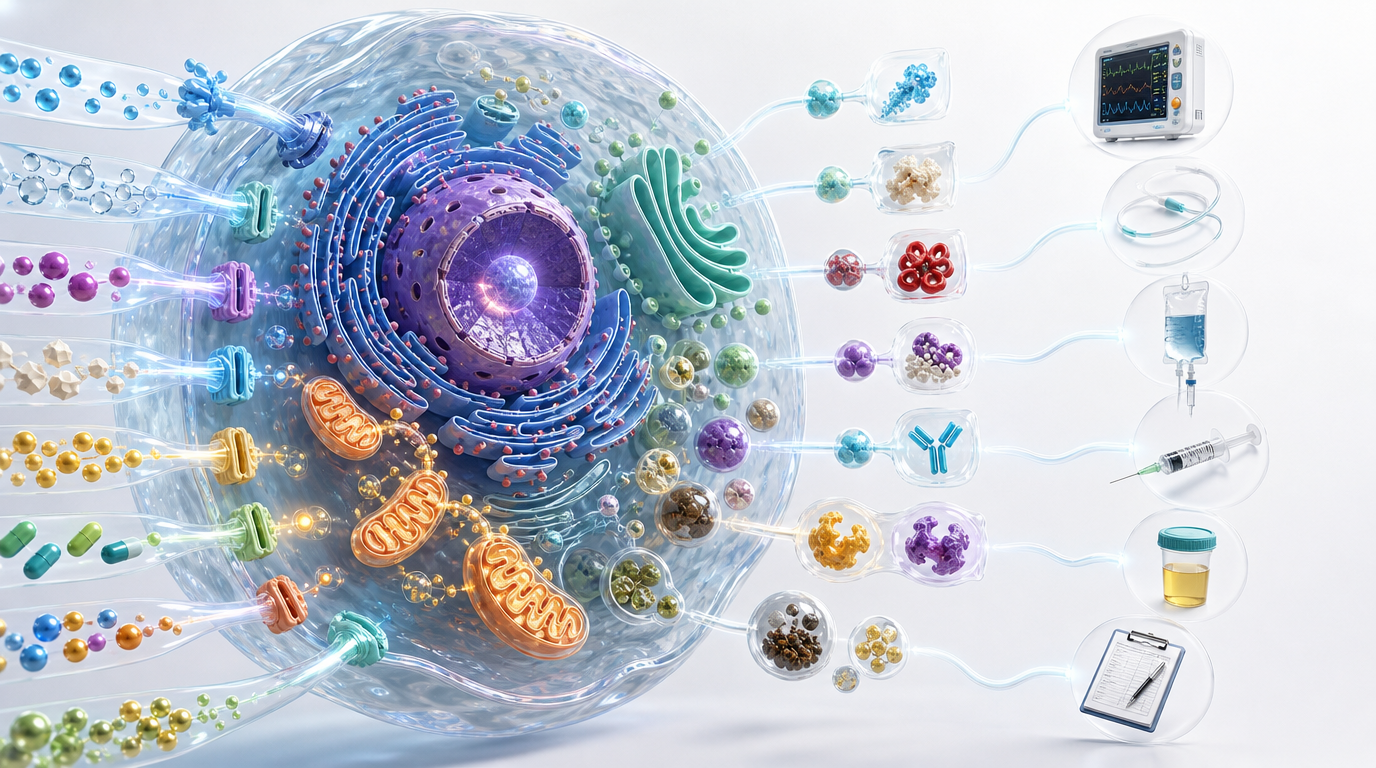
Every cue you will ever collect at the bedside begins in a cell that is either receiving what it needs, or is not.
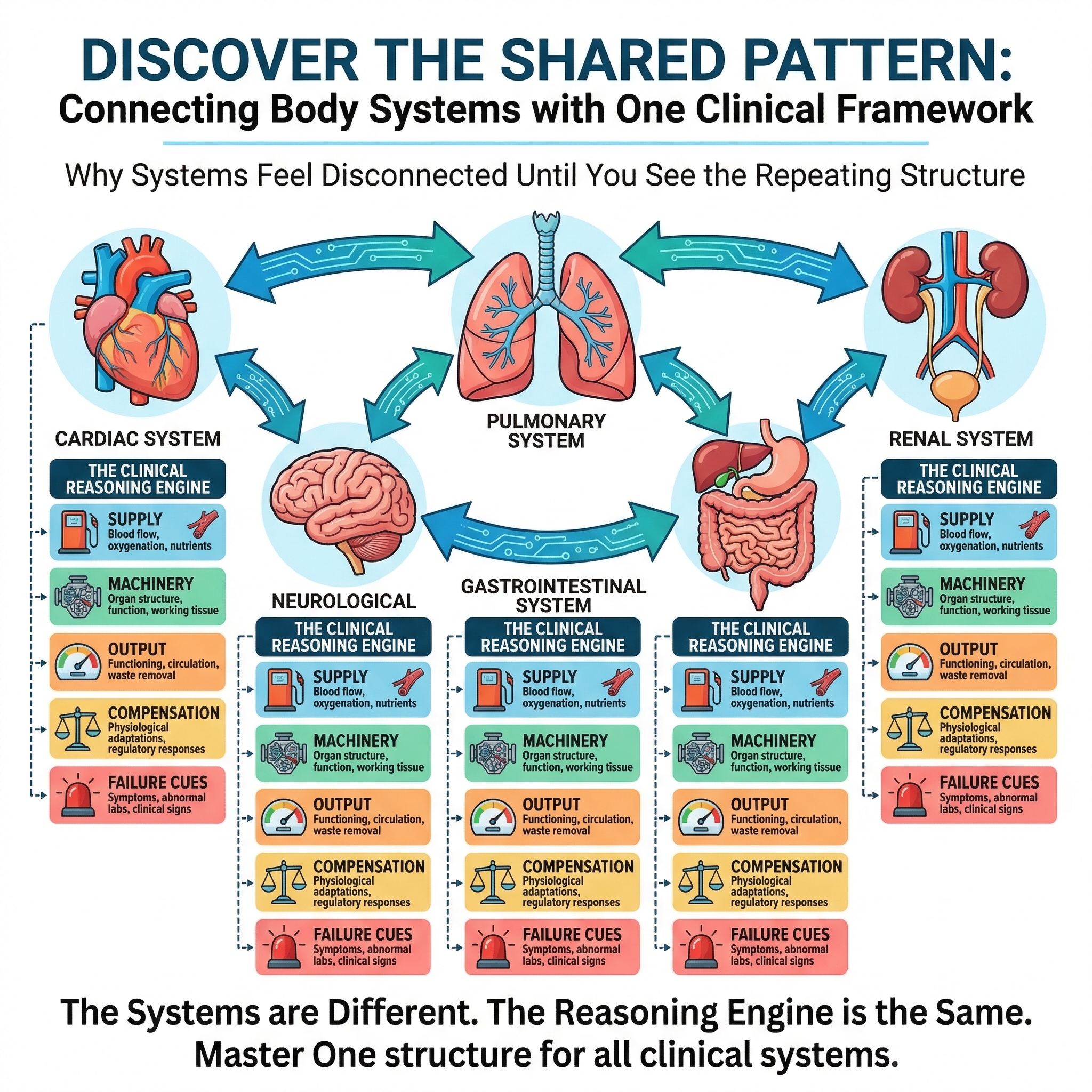
This is the starting layer for everything that comes later. Instead of learning anatomy, physiology, pharmacology, and safety as separate pieces, Phase 1 shows how they work together at the level of the cell.
Perfusion carries oxygen, glucose, water, and electrolytes to the cell factory. While delivery holds, the factory makes ATP and vital signs stay stable. When delivery falls short, the cell fails first and the cues you can see — level of consciousness, respiratory effort, heart rate, blood pressure, urine output — follow in a predictable order.
Why start here: once you can trace a cue back to the cell that is short of delivery, you are no longer memorizing lists. You are reading the patient, and that is the reasoning every later phase is built on.
System focus
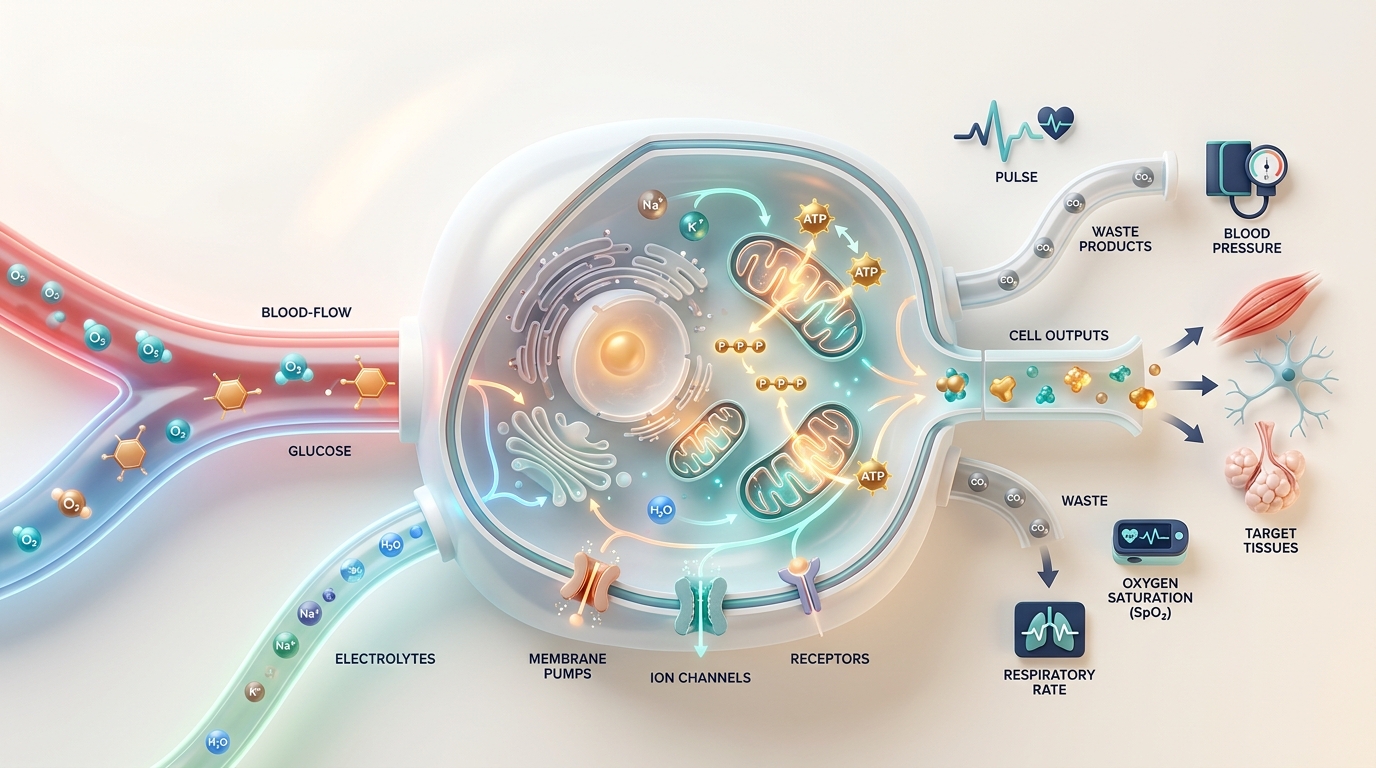
By the end of this phase, a new student should be able to explain patient cues without guessing.
Perfusion first, the cell as the unit of function, and vital signs as tangible proof of the ABCs. These four videos give the learner the mental model used across the tutorials below.
We will use it in a short audio welcome before the four foundation videos unlock.
Click the audio introduction first. When it finishes, the four foundation videos will unlock.
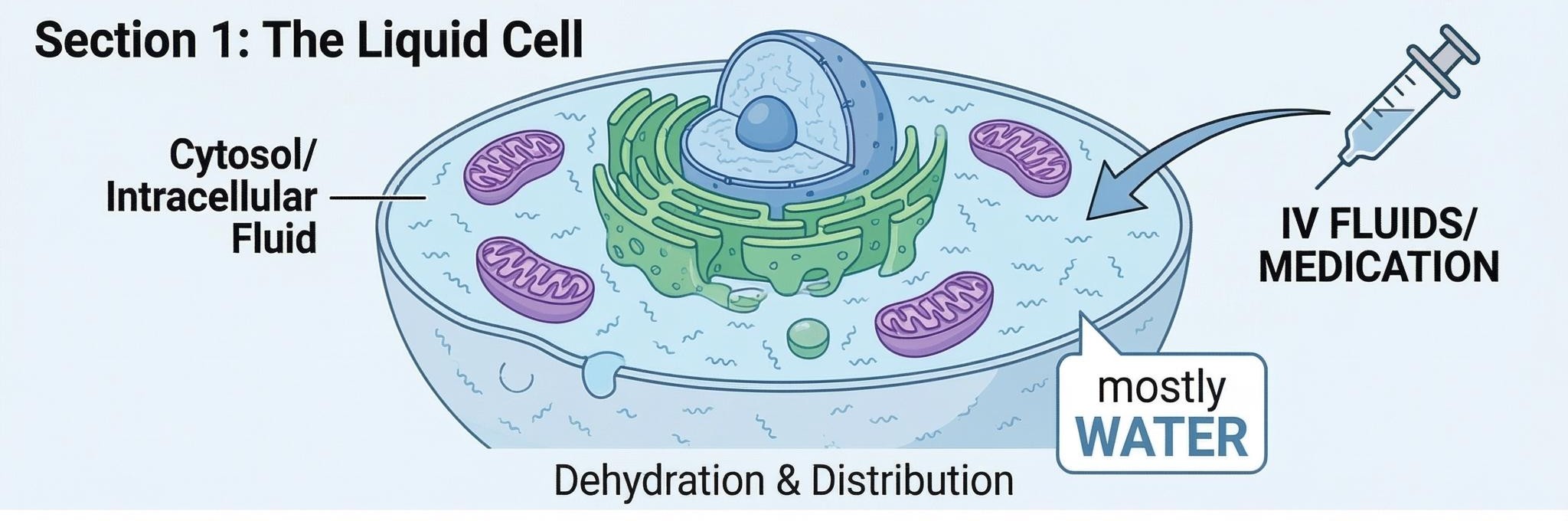
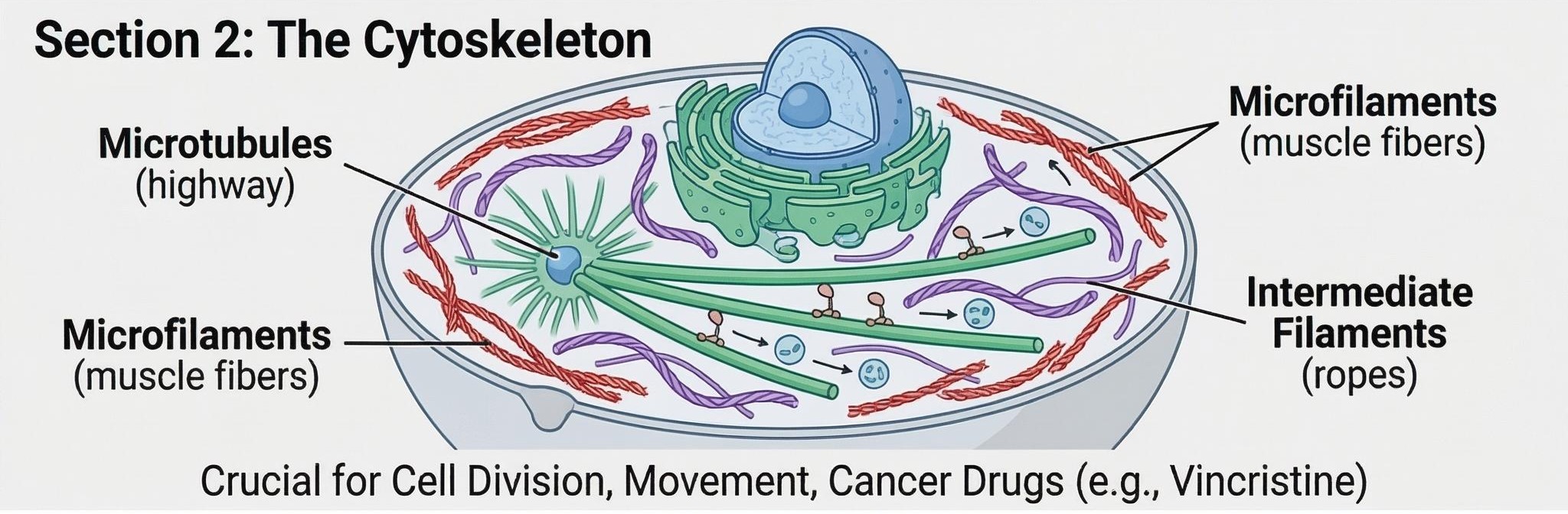
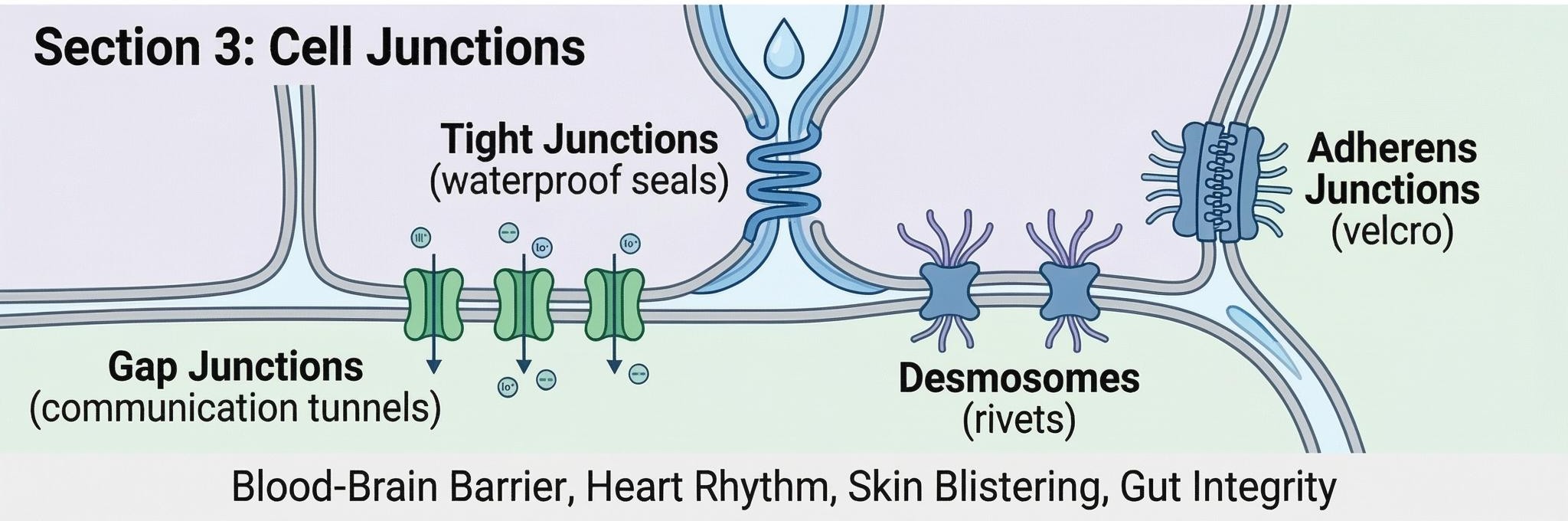
Learn the basic idea: every body part is made of cells, and each cell works like a tiny factory that needs supplies and energy.
Learn why blood flow matters first: it carries oxygen, glucose, water, electrolytes, nutrients, and medications to the cells.
Learn the rule underneath many NCLEX questions: if cells are not getting what they need, safety comes first.
Learn how vital signs tell you whether airway, breathing, circulation, and perfusion are holding up or starting to fail.
Fast drills for facts that must become automatic before the larger tutorials.
Watch to the end to continue.
What happens when the body's blood-cell assembly line runs short on raw materials, or the wrong blood type is transfused?
Before the heart can beat on its own, sodium, potassium, and calcium must move through the membrane in an exact, repeatable sequence.
How does the body field an immune army, read its own lab report, and then permanently seal a wound, all through chemistry alone?
Eleven specialist cells build every organ in the body — learn what each one makes so you can predict a patient's cues before they happen.
The original single-sitting walk through the cell factory with Agent Hypothal — the same ground the four Part 1 sections cover, taught as one continuous lesson.
A confused, swollen, short-of-breath patient is really one broken cell factory shouting through five layers of the body — can you trace the
Which vital sign or lab value should worry you most, and how do you decide what to do about it within your scope as an LPN?
Which part of a bacterial cell does each antibiotic class attack, and what happens when the survivors pass resistance to the next generation
Learn the suffix and you can predict the drug class, the target, and exactly which vital sign or lab value to check before you give it.
Eight patients, eight deteriorating pictures — can you recognize the cue, trace it to the failing cell, and choose the LPN's first action be
What happens when the bone marrow factory's off switch jams, its genetic blueprint is flawed, or rogue cells stage a hostile takeover?
Seven chemical messengers control your heartbeat, mood, movement, and breathing — and nearly every neuro and cardiac drug works by changing
A nerve impulse becomes a muscle contraction through a precise ten-step relay at the neuromuscular junction — and every step is a drug targe
Can you rebuild the entire cell, from its outer membrane down to its fluid compartments, before the gate lets you move on?